
Building Trust Between Importers and Exporters Through Trade Finance
If your business imports or exports internationally, getting a transaction completed safely and on agreed terms can be just as challenging as finding the right buyer or supplier. Importers may be reluctant to pay an overseas supplier before goods are shipped, while exporters may hesitate to release goods without confidence that payment will be received. These risks can become even more significant when transactions involve unfamiliar counterparties, different legal and banking systems, foreign currencies, large order values, or long shipping timelines. Without an effective payment mechanism, businesses can face delayed shipments, payment disputes, cash-flow pressure, or the loss of otherwise valuable international trading opportunities.
A Letter of Credit (LC) can help address these challenges by introducing banks into the transaction and establishing specific conditions that must be met before payment is made. This can provide the importer with greater control over the payment process while giving the exporter a structured, bank-mediated mechanism for receiving payment when the applicable LC terms and documentary requirements are satisfied.
In this practical 2026 guide, we explain how a Letter of Credit works, how the process typically unfolds from issuance through payment, the roles of the banks and trading parties involved, and the key considerations importers and exporters should understand before using an LC for international trade.
Ready to Secure Financing?
Discuss your requirements with our specialists and explore a finance structure aligned with your objectives.
This is where a Letter of Credit (LC) plays a critical role
A Letter of Credit remains one of the most trusted and widely used trade finance instruments in international commerce. It helps reduce risk, improve payment security, and create confidence between trading partners.
What is a Letter of Credit?
A Letter of Credit (LC) is a formal financial guarantee issued by a bank on behalf of a buyer (importer). The bank promises to pay the seller (exporter) a specified amount, provided the exporter fulfills all conditions outlined in the Letter of Credit.
In simple terms, the bank acts as a trusted intermediary between both parties.
Instead of relying solely on the buyer’s promise to pay, the exporter receives the security of a bank-backed payment commitment. At the same time, the buyer gains assurance that payment will only be released when the required shipping and trade documents are submitted according to the agreed terms.
This arrangement helps minimize risk and promotes smoother international business transactions.
Why are Letter of Credit Important in International Trade?
International trade often involves dealing with unfamiliar suppliers, different legal systems, varying currencies, and longer shipping timelines.
Without proper payment protection, both parties face significant risks:
• Exporters may ship goods and never receive payment.
• Importers may pay upfront and never receive the goods.
• Political or economic issues may disrupt transactions.
• Currency fluctuations and banking restrictions may create uncertainty.
A Letter of Credit helps address these concerns by providing a structured and secure payment process supported by reputable financial institutions.
How Does a Letter of Credit Work?
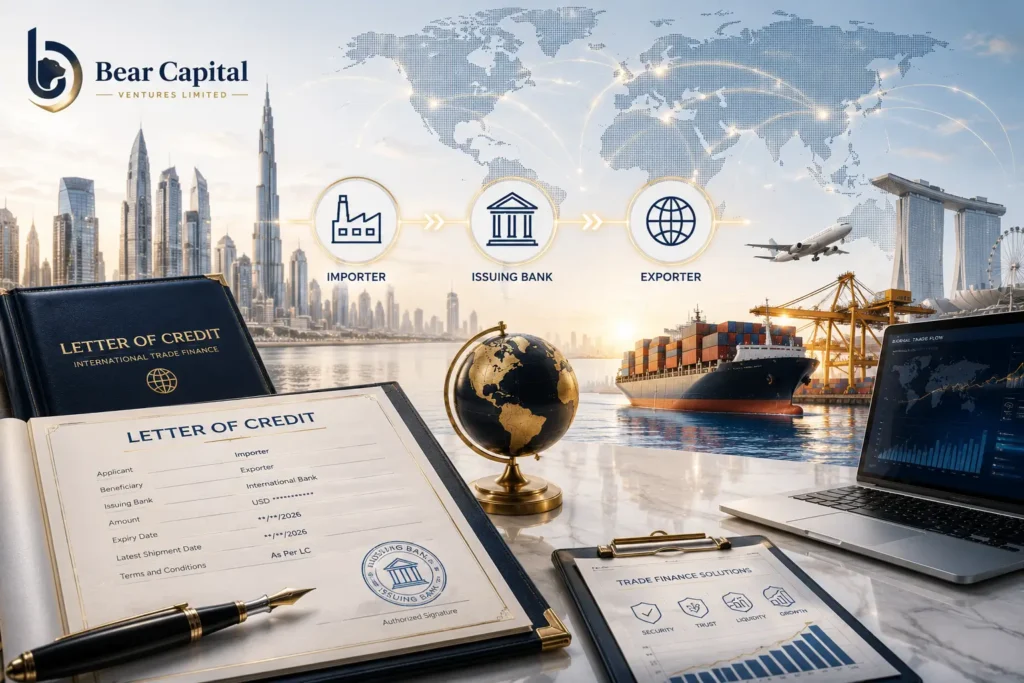
Understanding the LC process is easier when broken into a series of practical steps.
Step 1: Buyer and Seller Agree on Terms
The importer and exporter negotiate a sales agreement that includes payment through a Letter of Credit.
The contract typically outlines:
• Product specifications
• Quantity and pricing
• Delivery timelines
• Shipping requirements
• Required documentation
• Payment terms
Once both parties agree, the importer proceeds with the LC application.
Step 2: Importer Requests the Letter of Credit
The buyer applies for a Letter of Credit through their bank, known as the issuing bank.
Before issuing the LC, the bank evaluates:
• The buyer’s financial standing
• Credit history
• Available collateral
• Existing banking relationship
If approved, the bank issues the Letter of Credit according to the agreed commercial terms.
Step 3: The LC Is Sent to the Exporter’s Bank
The issuing bank forwards the Letter of Credit to the exporter’s bank, commonly referred to as the advising bank.
The advising bank verifies the authenticity of the LC and informs the exporter that the credit has been received.
The exporter carefully reviews all conditions before proceeding with production or shipment.
Step 4: Goods Are Manufactured and Shipped
After accepting the LC terms, the exporter prepares the goods and arranges shipment according to the agreed schedule.
Because payment depends on documentary compliance, exporters must pay close attention to every requirement listed in the Letter of Credit.
Step 5: Required Documents Are Submitted
After shipment, the exporter submits the required documents to their bank.
These commonly include:
• Commercial invoice
• Bill of lading
• Packing list
• Certificate of origin
• Inspection certificates
• Insurance documents
The exact documentation requirements depend on the terms specified in the Letter of Credit.
Step 6: Banks Review the Documents
The banks carefully examine the submitted documents.
It is important to understand that banks deal with documents not physical goods.
Their responsibility is to verify whether the paperwork complies exactly with the LC requirements.
Even minor discrepancies can result in delays or payment issues.
Step 7: Payment Is Released
If all documents comply with the LC conditions, payment is released according to the agreed terms.
Depending on the arrangement, payment may be:
• Immediate (Sight LC)
• Deferred for a specified period
• Accepted through a time draft arrangement
Once payment is completed, the importer receives the necessary documents to claim the goods.
Benefits of a Letter of Credit for Importers
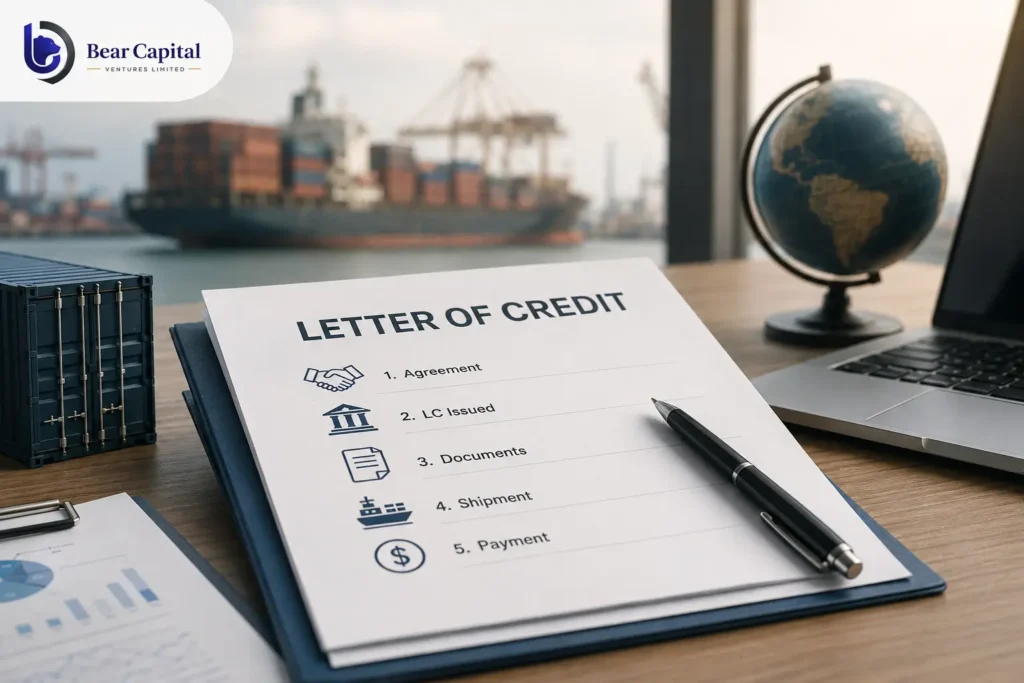
Importers gain several important advantages when using Letters of Credit.
Greater Payment Security
Funds are only released when the exporter provides the required documentation.
Improved Supplier Confidence
Many international suppliers are more willing to work with buyers who provide an LC because it demonstrates financial credibility.
Better Negotiating Power
An LC often helps buyers negotiate more favorable pricing and contract terms.
Enhanced Cash Flow Management
Certain LC structures allow buyers to access financing and manage working capital more efficiently.
Reduced Commercial Risk
The documentation process creates an additional layer of protection throughout the transaction.
Benefits of a Letter of Credit for Exporters
For exporters, payment security is often the primary concern.
A Letter of Credit offers significant protection against non-payment risks.
Bank-Backed Payment Assurance
The payment obligation is supported by a financial institution rather than solely by the buyer.
Reduced Credit Risk
Exporters can confidently trade with new customers in unfamiliar markets.
Improved Cash Flow Predictability
Knowing that payment is secured helps businesses plan operations more effectively.
Access to Financing Opportunities
Exporters may use confirmed or discounted Letters of Credit to improve liquidity and obtain working capital.
Market Expansion
Companies can pursue international opportunities with greater confidence and reduced financial exposure.
Finance Built Around Your Transaction
Discuss your requirements with our specialists and explore a finance structure aligned with your objectives.
Common Letter of Credit Challenges
Although Letters of Credit provide strong protection, they require careful management.
One of the most common causes of payment delays is documentary discrepancies.
Typical issues include:
• Incorrect product descriptions
• Spelling errors
• Inconsistent invoice details
• Missing documentation
• Incorrect shipment dates
• Documentation submitted after deadlines
Because banks apply strict compliance standards, even small mistakes can create costly delays.
Successful exporters often implement internal review procedures to ensure documents are accurate before submission.
Letter of Credit Trends in 2026
Trade finance is undergoing significant digital transformation. In 2026, many financial institutions are adopting technologies that streamline the Letter of Credit process and reduce administrative burdens.
Key trends include:
Electronic Documentation
Digital trade documents are reducing paperwork and accelerating transaction processing.
Automated Compliance Checks
Artificial intelligence and automation tools help identify document discrepancies before submission.
Blockchain-Based Trade Finance
Blockchain solutions are improving transparency, reducing fraud risk, and creating more efficient transaction records.
Faster Processing Times
Digital platforms enable banks and businesses to exchange information more quickly than traditional paper-based systems.
Greater Global Connectivity
Integrated trade finance ecosystems are helping businesses manage international transactions through centralized digital platforms.
Companies that embrace these innovations are often able to reduce costs, improve operational efficiency, and strengthen their competitive position in global markets.
Choosing the Right Trade Finance Partner
Successfully managing international trade transactions often requires more than just understanding how a Letter of Credit works. Businesses also need access to reliable financial partners that can provide trade finance solutions, risk mitigation strategies, and access to global capital.
Bear Capital Ventures Limited is a global financing provider serving individuals, governments, business owners, corporations, and clients worldwide. The company specializes in helping businesses access international capital markets and secure the funding needed to support growth, expansion, and long-term success.
In addition to traditional trade finance support, Bear Capital Ventures Limited offers financial instruments such as Bank Guarantee (BG) and Standby Letter of Credit (SBLC), along with comprehensive non-recourse monetization solutions for both BG and SBLC instruments. These solutions can help businesses enhance liquidity, strengthen credit positions, and support large-scale commercial transactions.
Bear Capital Ventures Limited also provides specialized trade finance, project finance, and financial advisory services tailored to the unique requirements of clients operating in global markets. As international commerce continues to evolve, working with experienced financing partners can help businesses navigate complex transactions, reduce risk, and capitalize on new opportunities.
By combining industry expertise with innovative financing solutions, Bear Capital Ventures Limited remains committed to empowering businesses with the financial tools and strategic support needed to achieve sustainable growth and long-term success.
Financial Resources
A Letter of Credit remains one of the most effective tools for managing risk in international trade. By providing a secure framework for payment, it helps bridge trust gaps between buyers and sellers while supporting smoother cross-border transactions.
For importers, an LC offers greater control over payment conditions and enhanced supplier confidence. For exporters, it provides valuable assurance that payment will be received when contractual obligations are fulfilled.
As global trade continues to evolve in 2026, understanding how Letters of Credit work can give businesses a significant competitive advantage. Whether you’re entering a new export market, sourcing products internationally, or strengthening relationships with overseas partners, a well-structured Letter of Credit can help protect your business and support long-term growth.
Contact A Reliable Letter of Credit Provider