
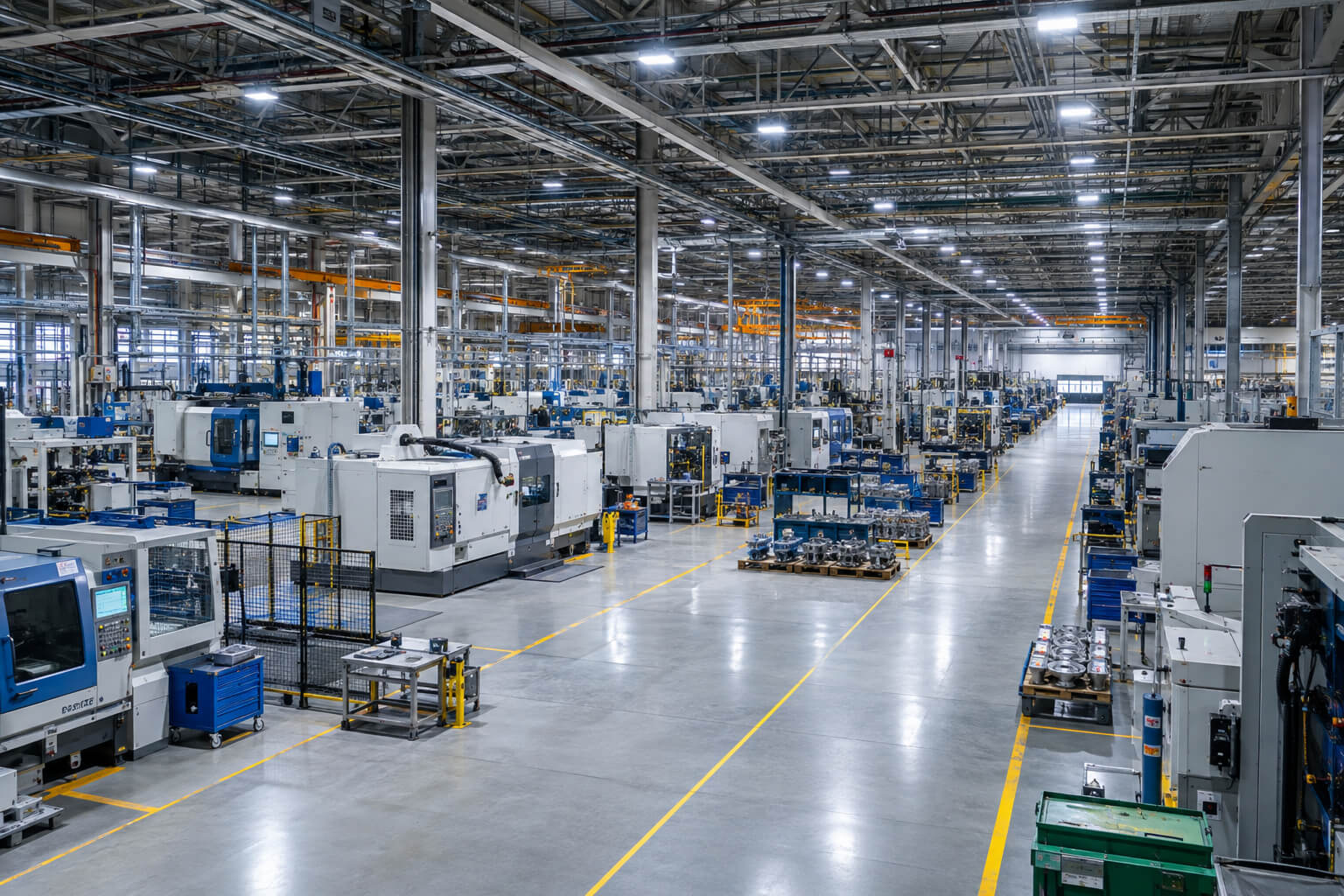
A manufacturer can have strong demand, a healthy order book and a clear opportunity to grow, yet still face a difficult financing decision when expansion requires substantial upfront capital. Buying new machinery, increasing production capacity, fitting out a larger facility, investing in automation or funding additional stock can place significant pressure on cash flow before the investment begins generating additional revenue. For a managing director, business owner or finance director, the challenge is therefore not simply finding a lender. It is deciding how much funding the project actually requires, which parts should be financed separately, what lenders will assess and how repayments can be supported by future trading performance.
The right structure can preserve working capital while allowing the business to invest in productive assets and pursue new contracts. The wrong structure can leave an otherwise successful manufacturer carrying unsuitable costs or insufficient liquidity.
Bear Capital Ventures Limited can help manufacturers assess their wider funding requirement and explore appropriate finance structures for equipment, facilities, working capital and business expansion.
Ready to Secure Financing?
Discuss your requirements with our specialists and explore a finance structure aligned with your objectives.
What Does a Manufacturing Expansion Actually Need to Fund?
A manufacturing investment rarely consists of a single invoice.
A business expanding production may need to finance machinery, installation, building works, software, automation, additional raw materials and the working capital required while production increases. If the business is importing equipment or components, there may also be a trade-finance requirement.
This is why the first step should be to calculate the complete project requirement, rather than immediately deciding that a conventional business loan is needed.
For example, a manufacturer could require:
- £600,000 for new production machinery
- £300,000 for facility improvements
- £150,000 for installation and automation
- £250,000 for additional working capital
The total requirement is £1.3 million, but that does not necessarily mean the entire £1.3 million should be financed in exactly the same way.
Which Finance Options Could Be Suitable?
Equipment and machinery finance
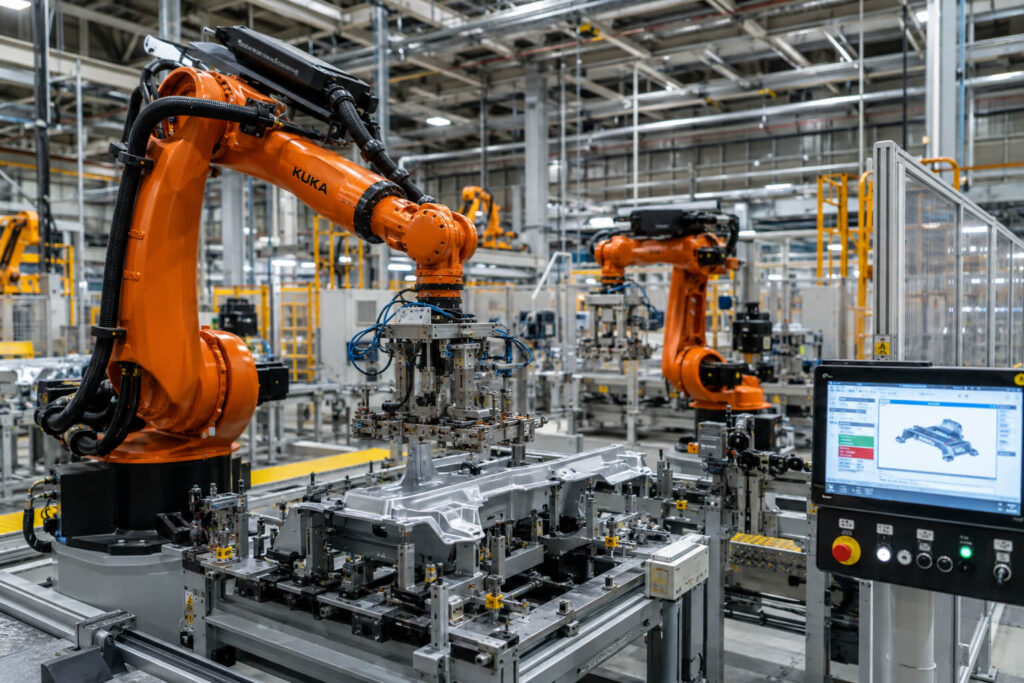
Asset finance can be appropriate for manufacturers investing in machinery, CNC equipment, production lines, robotics, packaging equipment and other productive assets.
Depending on the circumstances, options can include hire purchase, finance leasing and other asset-finance structures. Hire purchase can allow a business to spread the cost of an asset over an agreed period, while leasing can provide access to equipment without the same ownership arrangement.
Bear Capital Ventures Limited recognises both leasing and hire purchase as established forms of asset finance and notes that manufacturing plant and machinery can be financed in this way.
The right structure depends on factors such as the asset, its expected useful life, ownership requirements, available deposit, cash flow and lender criteria.
Finance for factories and facilities
When growth requires more than machinery, property finance may become relevant.
A manufacturer might need funding to purchase a factory, warehouse or production unit, expand an existing site or undertake significant building and fit-out work.
This requirement can have a very different repayment profile from a machine purchase, so it should be assessed separately when developing the overall financing structure.
Working capital finance
Growth itself can consume cash.
A manufacturer may need to purchase more materials, increase stock holdings, pay additional staff and meet supplier invoices well before customers pay for completed products.
This creates a working-capital gap.
Depending on the business and circumstances, potential solutions can include working-capital facilities, invoice finance, revolving facilities or other forms of business finance.
The important point is not to finance the machinery while overlooking the cash required to operate it.
Trade and import finance
Manufacturers buying machinery, components or raw materials internationally may have additional financing requirements.
Trade finance can potentially help businesses manage supplier payments and the timing difference between purchasing inputs, manufacturing products and receiving customer payment.
For exporters, financing may also be relevant where a large contract creates a substantial requirement for production capital before payment is received.
What Will a Lender Assess?
A finance provider needs to understand both the business and the reason for the investment.
The information requested will depend on the transaction, but manufacturers should generally be prepared to provide financial accounts, management information, bank statements, details of existing borrowing, supplier quotations, business forecasts and information about the proposed investment.
For a larger expansion, the commercial case becomes particularly important.
If a £500,000 machine is expected to increase production capacity, the proposal should explain how that additional capacity translates into sales and cash flow. Existing contracts, customer demand, order pipelines and production forecasts can help demonstrate the reason for the investment.
A lender is ultimately assessing whether the proposed structure makes sense for the business and whether the anticipated cash flow can support the obligations.
How Much Manufacturing Finance Can You Obtain?
There is no universal funding limit that applies to every manufacturer.
The amount and structure available can depend on profitability, turnover, existing debt, asset values, security, management experience, projected cash flow, the purpose of the funding and the appetite of the relevant lender.
Government-backed programmes may also be relevant to eligible businesses. For example, the UK Growth Guarantee Scheme can support eligible SMEs through participating lenders with products including term loans, asset finance, invoice finance and asset-based lending. Availability and eligibility depend on the scheme rules and lender assessment.
For this reason, manufacturers should avoid choosing a finance product based solely on an advertised maximum facility size.
The more useful question is whether the proposed amount is appropriate for the project and sustainable for the business.
Why the Structure Matters as Much as the Amount
Consider a manufacturer investing £1 million in new production capacity.
Using all available cash to purchase equipment could minimise borrowing but leave the company short of working capital. Conversely, financing every project cost through short-term borrowing could create unnecessary repayment pressure.
A more considered approach may involve matching different costs to different facilities.
For example, equipment could potentially be financed over a period aligned with its useful economic life, while working capital could be supported through a more flexible facility.
The precise structure will depend on the transaction, but the underlying principle is important:
The financing period should make commercial sense for what is being financed and how the business generates cash.
Ready to Secure Financing?
Discuss your requirements with our specialists and explore a finance structure aligned with your objectives.
What Costs and Risks Should Manufacturers Consider?
The headline interest rate is only one part of the financing decision.
Before accepting an offer, consider the total cost of borrowing, arrangement fees, deposits, repayment schedule, security requirements, early-repayment provisions and any other conditions attached to the facility.
Manufacturers should also consider what happens if projected growth is slower than expected.
A new production line may increase capacity without immediately increasing sales. Additional equipment can also create installation, maintenance, training and commissioning costs that were not included in the original purchase price.
Working-capital requirements can rise at the same time.
A realistic funding plan therefore needs to consider the full cash-flow effect of expansion, rather than simply the acquisition cost of the asset.
How to Build a Stronger Manufacturing Finance Proposal
A lender will usually have a much clearer basis for assessment when the financing request is connected directly to the manufacturer’s commercial plan.
Instead of simply requesting £1 million for expansion, explain:
- what the money will fund;
- why the investment is necessary;
- what additional production capacity it creates;
- whether customer demand supports that capacity;
- how much working capital the expansion requires;
- the expected impact on revenue and margins;
- how existing borrowing will be managed; and
- how proposed repayments fit projected cash flow.
This turns a financing request into a coherent business case.
For manufacturers with several requirements, Bear Capital Ventures Limited can assess the wider transaction rather than focusing only on one individual funding product. Its services include project finance, working capital, trade finance, structured finance and equipment finance, which may be relevant where an expansion requires a combination of funding solutions.
When Should You Approach a Finance Provider?
Ideally, before the requirement becomes urgent.
Waiting until cash reserves are exhausted or a supplier deadline is imminent can restrict the available options and make an otherwise viable project harder to structure.
Manufacturers planning significant investment should prepare their financial information, equipment or property quotations, forecasts and details of the commercial opportunity as early as possible.
For a complex transaction, the process may involve financial analysis, due diligence, asset or property assessment, lender selection, documentation and final approval. The timescale varies according to the size and complexity of the requirement.
Can Different Types of Finance Be Combined?
Yes. For a substantial manufacturing expansion, combining facilities can sometimes make more commercial sense than relying on a single source of funding.
A business might use equipment finance for machinery, property finance for premises, working-capital finance for the production ramp-up and trade finance for imported materials.
The exact structure depends on the business, project and relevant lender criteria. The objective is to ensure that long-term investment does not unnecessarily consume the liquidity required to keep the factory operating.
That distinction becomes particularly important when growth is being driven by a major new contract. The business may need to spend substantially before receiving the associated customer revenue.
What Should You Prepare Before Seeking Manufacturing Finance?
A manufacturer considering finance should ideally have a clear view of:
- The total amount required.
- Exactly what the funding will purchase or support.
- Supplier quotations and project costs.
- Existing borrowing and commitments.
- Recent financial performance.
- Forecast revenue and cash flow.
- Major contracts or orders supporting the expansion.
- Available security or assets where relevant.
- The expected timing of expenditure and revenue.
Having this information ready can make the initial finance discussion considerably more productive.
Five Questions Manufacturers Commonly Ask
Can manufacturing finance be used for used machinery?
Potentially. Some asset-finance providers fund used machinery, although the asset’s age, condition, value, supplier and type can affect availability and structure.
Can equipment and working capital be financed together?
Potentially, although separate facilities may be more appropriate. The best approach depends on the asset, cash-flow requirement and lender criteria.
Can finance be used to expand a factory?
Potentially. Purchasing premises, construction, refurbishment and equipment can involve different financing structures, so the complete project should be assessed.
Does having a large order make finance easier to obtain?
A credible contract or strong order pipeline can strengthen the commercial rationale for expansion, but it does not guarantee approval. The business and its ability to service the proposed finance will still need to be assessed.
What information should I provide to Bear Capital Ventures Limited?
Start with the funding amount, purpose, quotations, recent financial information, existing borrowing and details of the expansion or contracts driving the requirement. Bear Capital Ventures Limited can then assess the requirement and consider potentially appropriate financing structures.
Turn Your Expansion Plan into a Financeable Structure
The better question is not simply “Where can I get a manufacturing loan?”
It is:
“What does my expansion actually need to be financed, and what is the most appropriate structure for each part?”
That distinction can be important when a project combines machinery, facilities, working capital and international trade requirements.
If your manufacturing business is preparing to purchase equipment, increase production capacity, expand facilities, fulfil a major contract or fund a working-capital gap, Bear Capital Ventures Limited can assess the wider requirement and explore suitable financing structures around the project.
Contact Bear Capital Ventures Limited
Written by Bear Capital Ventures Limited
Bear Capital Ventures Limited specializes in educational content covering global finance, trade finance solutions, corporate funding, financial instruments, and international capital markets. We provide insights into structured finance solutions, Bank Guarantees, Standby Letters of Credit and business funding strategies for organizations exploring global growth opportunities.