

A pharmaceutical company can have strong demand, established customers and a clear expansion opportunity yet find that growth is constrained by the amount of capital tied up in manufacturing, inventory and international trade. For a Pharmaceutical company owner, business owner, finance director or managing director, the problem may be a new production facility, additional filling and packaging lines, imported APIs, longer customer payment cycles or the acquisition of another manufacturing business. The challenge is finding a financing structure that matches the actual use of capital without creating unnecessary pressure on cash flow.
Pharmaceutical company financing therefore needs to be built around the business’s operating model, assets, contracts and growth plans. Bear Capital Ventures Limited helps businesses explore potential project, corporate, working-capital, trade and structured financing solutions for specific commercial requirements.
Ready to Secure Financing?
Discuss your requirements with our specialists and explore a finance structure aligned with your objectives.
The financing requirement is rarely just “a loan”
A pharmaceutical manufacturer may need several types of capital at the same time.
A new facility requires development and construction funding. Production expansion may require machinery and equipment finance. International growth can increase the amount of cash tied up in inventory and receivables. Imported active pharmaceutical ingredients (APIs) may need to be paid for before finished medicines are sold and collected.
These requirements can sit alongside one another.
The financing was designed around the company’s supply-chain and foreign-currency requirements rather than simply labelled as generic business expansion finance.
That distinction matters. The right funding structure should follow what the capital is actually being used for.
Match the funding to the business requirement
| What the company needs | Financing that may be relevant |
| New manufacturing plant | Project or development finance |
| Expansion of an existing facility | Corporate, project or structured finance |
| Production and laboratory equipment | Equipment finance |
| APIs and raw materials | Working capital or trade finance |
| Export orders | Export or trade finance |
| Inventory and receivables | Working-capital facilities |
| Acquisition of a manufacturer | Acquisition or structured finance |
| Contractual or payment support | Bank Guarantee or SBLC |
| Multi-country expansion | Corporate, trade or structured finance |
This approach prevents a common mistake: choosing a financial product first and attempting to make the project fit it afterwards.
For example, a company spending $20 million on a new sterile manufacturing facility may require a very different structure from an established manufacturer seeking $5 million to purchase APIs and fulfil confirmed export orders.
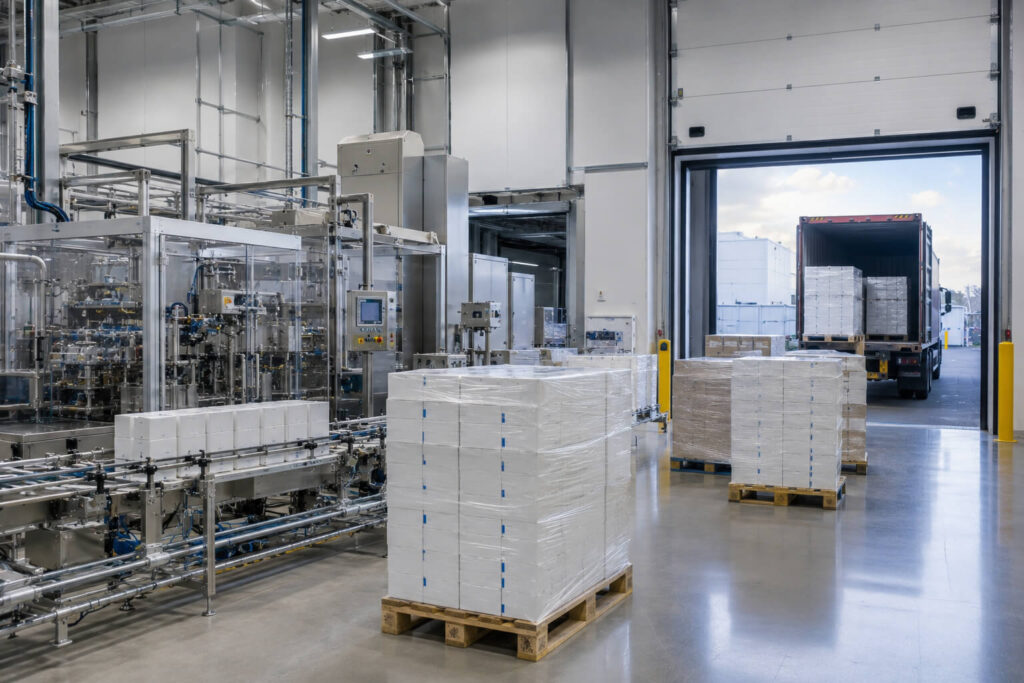
Financing manufacturing capacity
Manufacturing expansion is one of the clearest cases where substantial external capital can be justified.
Costs can include land and buildings, cleanrooms, utilities, production lines, filling systems, packaging equipment, laboratories, quality-control infrastructure, storage and specialised technology.
Recent transactions demonstrate that pharmaceutical manufacturing can attract substantial institutional financing.
In August 2026, Bear Capital announced financing of up to $10 million to expand and modernise production capacity, including a new production facility, machinery, equipment and working capital, while increasing export capacity.
Bear Capital Ventures Limited has also financed pharmaceutical manufacturers for combinations of capacity expansion, working capital and modernisation. Its financing for example, included upgrading existing processing facilities, expanding production capacity and increasing working capital.
The lesson is important for companies seeking funding: a financing request becomes stronger when the capital requirement is tied to identifiable assets, production capacity, contracts and measurable commercial outcomes.
Ready to Secure Financing?
Discuss your requirements with our specialists and explore a finance structure aligned with your objectives.
Equipment can sometimes be financed separately
Not every expansion needs to be financed through a large corporate facility.
Specialised pharmaceutical machinery can represent a significant standalone financing requirement. Production and analytical equipment, drying systems, air-handling systems, chillers, packaging machinery and other assets can potentially be financed against the equipment and the strength of the operating business.
There is evidence of specialist lenders completing multi-million-dollar pharmaceutical equipment transactions. Bear Capital reports a $3 million capital lease for a pharmaceutical manufacturer in 2025, secured by manufacturing and analytical equipment, following a facility acquisition.
This can be useful where management wants to preserve working capital for inventory, payroll or commercial expansion instead of using all available cash to purchase machinery.
The economics still need to make sense. Management should compare the total financing cost, repayment period, asset life and expected increase in production or revenue before proceeding.
Working capital can become the hidden constraint
Pharmaceutical manufacturing often requires cash well before revenue is collected.
A manufacturer may have to purchase APIs, excipients and packaging materials, complete production and quality testing, hold inventory and then wait for customers or distributors to pay.
International expansion can make this cycle even longer.
The $58 million long-term loan was intended to address working-capital requirements amid limited U.S.-dollar financing availability, helping the company secure materials needed for production.
Working-capital finance may therefore be appropriate when the company is commercially healthy but growth is absorbing liquidity faster than operating cash flow can replenish it.
The key question is not simply “How much working capital do we need?”
It is:
How much cash is tied up between purchasing inputs, manufacturing, selling and collecting the resulting receivable?
International growth creates another financing layer
Entering new markets can increase sales while simultaneously increasing the company’s financing requirement.
New distributors may require longer payment terms. Regulatory and registration costs can arise before sales begin. Export orders can increase production requirements before payment is received. Currency differences can also create additional exposure.
Trade finance, import finance, export finance and working-capital facilities may therefore complement longer-term expansion funding.
Bear Capital Ventures Limited identifies trade finance, working capital, project finance and corporate finance among its business financing solutions and states that it works with businesses involved in international transactions and expansion.
For a pharmaceutical company, this broader approach can be valuable because the financing requirement may change as the business moves from factory investment to production and then to international sales.
Where Bank Guarantees and SBLCs actually fit
Bank Guarantees and Standby Letters of Credit can have a role in pharmaceutical transactions, particularly where a company must provide financial assurance to a supplier, customer, contractor or other counterparty.
They should not, however, be confused with ordinary growth capital.
A Bank Guarantee supports a defined obligation according to its terms. An SBLC provides a bank undertaking that can be drawn upon when specified conditions are met.
Bear Capital Ventures Limited offers Bank Guarantee and SBLC-related services alongside trade and project financing.
The relevant questions are the purpose, beneficiary, amount, tenor, issuing institution, wording and underlying commercial transaction. A company should establish these details before assuming that a guarantee or SBLC is the correct answer to a broader financing requirement.
What financiers will want to understand
A serious financing assessment normally goes beyond a business plan.
Management should be prepared to demonstrate:
- Recent audited or management financial statements.
- Ownership and corporate structure.
- Existing borrowing and security.
- Details of the proposed project or expansion.
- Total investment and amount being requested.
- Supplier quotations for major equipment.
- Production capacity and utilisation.
- Key customer, supply and distribution agreements.
- Regulatory and manufacturing approvals relevant to the business.
- Historical and projected cash flow.
- Existing and expected export activity.
- Details of inventory and receivables where working capital is requested.
- The proposed source of sponsor contribution or equity.
For a new facility, a lender may also need construction budgets, technical studies, project timelines, contractor information and evidence supporting expected revenues.
For an established manufacturer, historical trading performance and recurring customer relationships may carry greater weight.
Ready to Secure Financing?
Discuss your requirements with our specialists and explore a finance structure aligned with your objectives.
What affects the cost and timing?
There is no universal interest rate, financing fee or approval timetable for pharmaceutical businesses.
Pricing can be affected by the company’s financial strength, transaction size, security, jurisdiction, currency, tenor, cash-flow profile and perceived risk. A secured equipment facility may have very different economics from a long-term development facility for a new manufacturing plant.
Timing is similarly transaction-specific.
A relatively straightforward equipment transaction can move faster than a large financing requiring technical, legal, financial and regulatory due diligence. Cross-border transactions can introduce additional documentation and institutional approvals.
Companies should therefore begin preparing before the funding deadline becomes urgent.
A stronger financing request starts with five numbers
Before approaching a financing partner, management should be able to state clearly:
Total project or expansion cost.
Amount already invested.
Additional capital required.
Exact use of the funds.
Expected source of repayment.
Those figures should be supported by financial projections and relevant commercial documentation.
If a company needs $8 million to expand production, for example, it is more useful to explain that $3 million is required for manufacturing equipment, $2 million for facility upgrades and $3 million for working capital than to submit a single unexplained $8 million funding request.
That level of detail allows potential financiers to consider whether one facility or a combination of financing structures is more appropriate.
Frequently Asked Questions About Pharmaceutical Company Financing
Can a pharmaceutical company finance a new manufacturing facility?
Potentially. Project, development, corporate or structured financing may be relevant depending on the company’s financial position, project economics, assets, contracts and expected cash flow.
Can pharmaceutical manufacturing equipment be financed?
Yes, equipment finance or leasing can be relevant for qualifying production, laboratory, analytical and packaging equipment. The asset, supplier, company finances and expected repayment capacity will influence the structure.
Can financing cover pharmaceutical working capital?
Potentially. Working-capital facilities can help established manufacturers manage inventory, API purchases, receivables and operating cash requirements. The amount and structure depend on the underlying business cycle and financial position.
Is trade finance useful for international pharmaceutical expansion?
It can be. Import and export finance may help companies fund qualifying international purchases, shipments or transactions while preserving liquidity for other business requirements.
What should I provide when requesting pharmaceutical company financing?
Start with the amount required, purpose of funds, company ownership, financial statements, existing debt, project or expansion details, major contracts, equipment quotations and cash-flow projections. Additional due diligence will depend on the proposed structure.
Turn the expansion plan into a financeable requirement
Pharmaceutical companies do not necessarily need to choose between “a loan” and “no financing.” A manufacturing expansion can involve several distinct capital requirements, and each can potentially be matched with a different financing solution.
A company building capacity may need project or development finance. A manufacturer buying machinery may benefit from equipment finance. A business importing APIs may need working-capital or trade finance, while a company entering new markets may require a combination of corporate and trade facilities.
Bear Capital Ventures Limited can review your company’s specific requirement and explore appropriate financing structures across project finance, working capital, trade finance, import/export finance, equipment finance, corporate finance and structured finance.
For a pharmaceutical business preparing a significant expansion, the most productive next step is to assemble the numbers, contracts and supporting documents that demonstrate what is being financed, why the capital is required and how the business expects to repay it.
Written by Bear Capital Ventures Limited
Bear Capital Ventures Limited specializes in educational content covering global finance, trade finance solutions, corporate funding, financial instruments, and international capital markets. We provide insights into structured finance solutions, Bank Guarantees, Standby Letters of Credit and business funding strategies for organizations exploring global growth opportunities.