
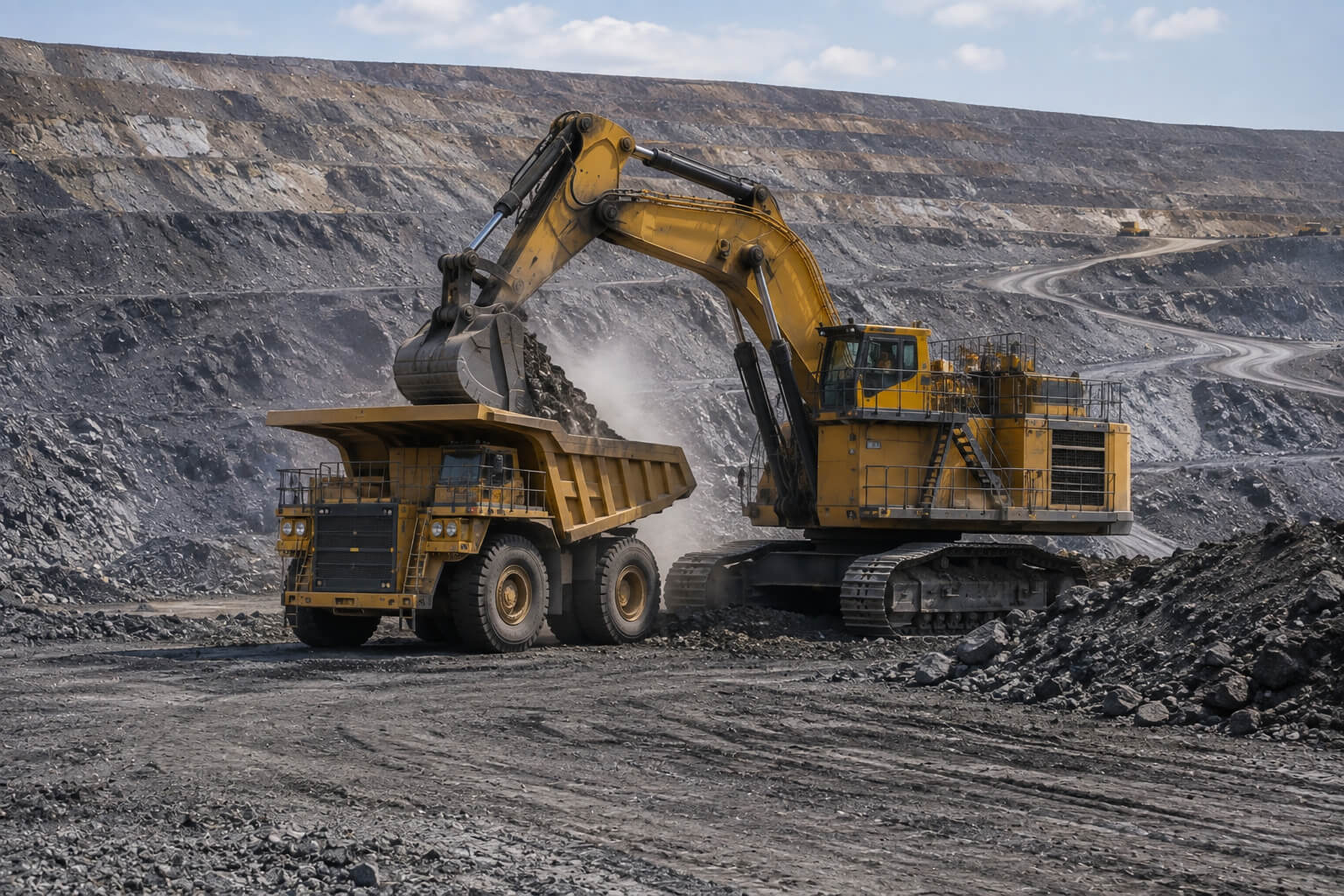
For a mining company with sufficient cash reserves, paying outright for a new haul truck, excavator, drill rig or processing system may appear to be the safest choice. There is no lender, no interest bill and no monthly repayment. But for a mining director or mining business owner overseeing a major fleet purchase, the real question is different: what else could that cash do for the business? A multimillion-dollar equipment purchase can tie up liquidity that might otherwise support production, working capital, mine expansion, exploration or another acquisition. Mining equipment financing can therefore be a capital-allocation decision rather than a sign of financial weakness. The right comparison is between the total financing cost and the strategic value of retaining cash.
The decision comes down to whether retaining the cash creates more value for the mining company than the cost of financing the equipment.
Ready to Secure Financing?
Discuss your requirements with our specialists and explore a finance structure aligned with your objectives.
The real question is not whether you can afford the equipment
A profitable mining company may have enough cash to purchase equipment and still choose financing.
Why? Because cash has an opportunity cost.
Suppose a mining operator has $20 million of available liquidity and needs $5 million of equipment. Paying cash leaves $15 million. Financing the equipment might allow the company to retain most of that $5 million while paying for the asset over time.
The financing only makes economic sense, however, if the value of retaining that liquidity justifies the financing cost.
That means management should compare:
- Total interest, fees and other financing costs
- Cash retained by financing
- Expected productivity and cash generation from the equipment
- Alternative uses for the retained capital
- Required liquidity reserves
- Existing debt capacity
- Commodity-price and operating risks
This is a capital-structure decision, not simply an equipment-purchasing decision.
Why mining companies place unusual value on liquidity
Mining businesses operate with substantial fixed costs and exposure to commodity cycles.
Fuel, labour, maintenance, contractors, processing, transportation and other operating expenses continue even when production or commodity prices weaken.
A company that spends heavily on equipment today may therefore have less flexibility when conditions change.
Retaining liquidity can provide room to:
- Fund operating expenditure
- Cover unexpected maintenance
- Manage production interruptions
- Expand an existing mine
- Acquire additional assets
- Fund exploration
- Purchase inventory or inputs
- Take advantage of distressed opportunities
- Maintain a stronger liquidity buffer during commodity downturns
This is why the strongest argument for equipment financing is not “we don’t have the money.”
It can be:
“We have the money, but we believe the cash has a more valuable use elsewhere.”
When financing equipment can be economically rational
The strongest case exists when the equipment is expected to generate dependable operating value.
Consider a $5 million mining fleet addition that materially increases production capacity. If financing allows the company to retain $5 million that can be deployed into another productive opportunity, management can compare the expected return from that capital with the effective cost of financing the equipment.
The calculation should not rely solely on the nominal interest rate.
Management should consider the all-in cost, including arrangement fees, commitment fees, deposits, residual payments, insurance requirements and other transaction costs.
Against that cost, the company can assess the value of:
- Higher production
- Lower cost per tonne
- Reduced downtime
- Greater fleet utilisation
- Faster project development
- Preserved working capital
- Alternative investment returns
There is no universal answer. If financing is expensive and the retained cash has no compelling alternative use, paying cash may be better.
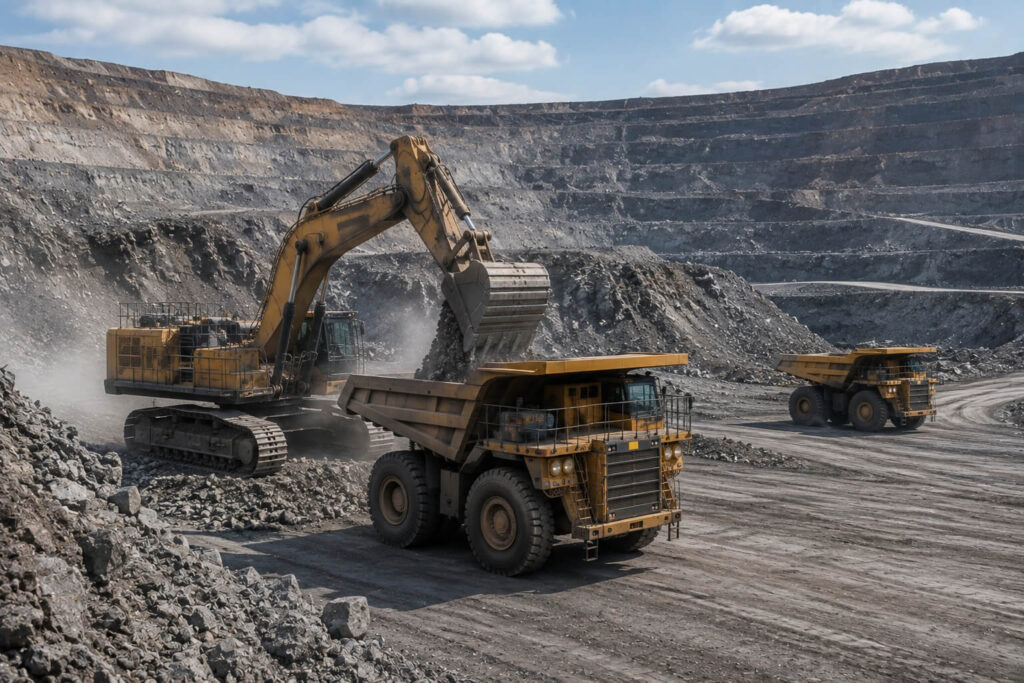
What mining equipment can be financed?
The appropriate structure depends on the asset, its useful life and the economics of the operation.
Commonly financed assets include:
- Haul trucks
- Excavators and loaders
- Drilling equipment
- Bulldozers and graders
- Crushers and screening systems
- Conveyors
- Underground mining equipment
- Processing equipment
- Power and support systems
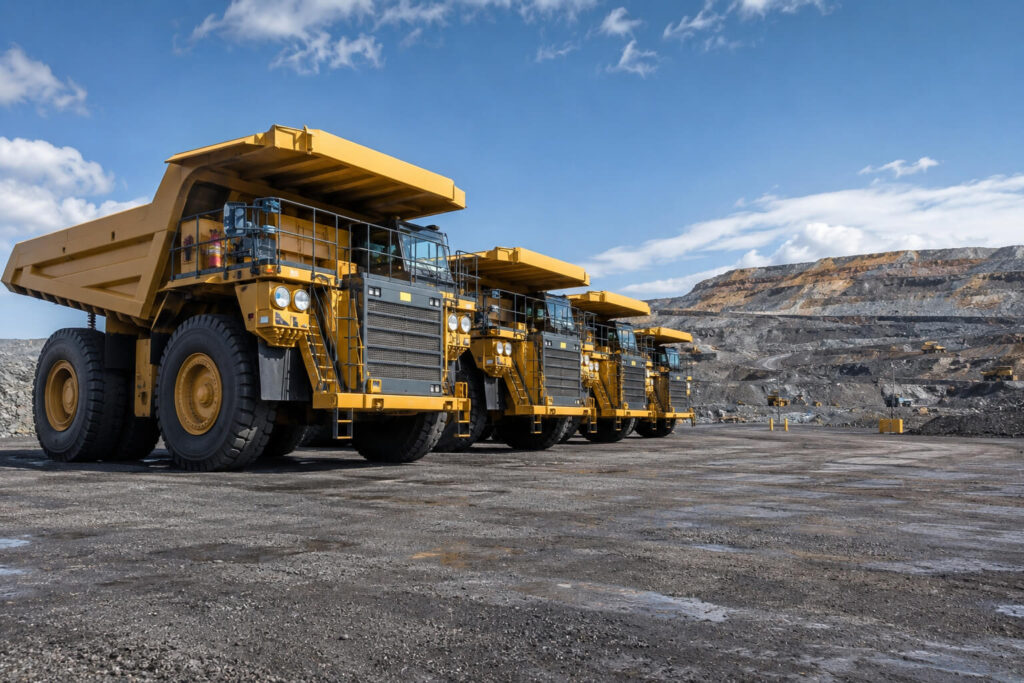
- Complete mining fleets
Bear Capital global mining finance operation, for example, lists operating leases, finance leases, loans, rental programmes and project financing among its potential structures, and notes that payment arrangements can sometimes be aligned with mine production or commodity prices.
That demonstrates an important point: sophisticated equipment financing does not necessarily mean a standard monthly loan.
Which structure could fit?
Equipment loan
A secured equipment loan can allow the mining company to acquire the asset while spreading repayment over an agreed period. The equipment may provide security for the facility.
This can be attractive where the company wants ownership while avoiding a large immediate cash outflow.
Finance lease
A finance lease can spread the equipment cost through scheduled payments while giving the business contractual use of the asset.
The accounting and tax consequences depend on the jurisdiction and structure, so professional advice should be obtained before selecting the product.
Operating lease
Where retaining flexibility is more important than eventual ownership, an operating lease may be considered.
This can be relevant for equipment with predictable secondary-market demand or where a company expects to replace machinery regularly.
Sale-and-leaseback
A company that already owns equipment may potentially unlock liquidity by selling eligible assets to a financier and leasing them back.
This can release capital without immediately removing the equipment from operational use, although it creates a continuing payment obligation and should be evaluated against the asset’s value and long-term economics.
What financiers will actually assess
Having cash does not automatically make a mining company an attractive financing candidate.
A financier may examine the company’s:
Cash flow: Can operating cash flow comfortably support scheduled payments?
Balance sheet: What existing debt, liabilities and liquidity does the business have?
Equipment: What is the equipment worth, how specialised is it, and what is its expected residual value?
Utilisation: Will the equipment be consistently productive?
Mine economics: What production, pricing and operating assumptions support repayment?
Management: Does the company have the operational capability to use the equipment effectively?
Commodity exposure: How vulnerable are repayment assumptions to price movements?
Security: What assets or other security are available?
Documentation: Are purchase contracts, supplier invoices, financial statements and project information available?
Specialist lenders demonstrate how underwriting can become more detailed for larger transactions. Bear Capital, for example, distinguishes between smaller transactions requiring limited information and big-ticket transactions requiring several years of financial statements, current-year information and details of existing loans and leases.
A real example of why equipment finance can be strategic
This is not merely a theoretical financing technique.
In 2025, Bear Capital Ventures Limited announced a $75 million equipment financing facility with Cat Financial to fund 85% of the purchase price of its mining fleet along with parts, product support and training. The facility was structured as a five-year term loan secured by the equipment.
Similarly, Bear Capital Ventures Limited announced in April 2026 a structured equipment-financing facility of up to $150 million, with an initial $20 million tranche, to support fleet expansion as new operations launched.
These examples illustrate the broader principle: equipment finance can support expansion and deployment of capital, rather than simply rescue a company that cannot afford an asset.
When using cash may actually be better
A credible financing strategy must acknowledge the other side.
Paying cash can make sense where:
- The company has substantial surplus liquidity
- Financing rates and fees are unattractive
- The equipment purchase receives a significant cash discount
- The asset has uncertain productivity
- The company has limited debt capacity
- There are no compelling alternative uses for the cash
- Management wants to minimise fixed financial obligations
The decision should never be reduced to “debt is better than cash.”
The correct question is whether retaining cash creates enough economic or strategic value to compensate for the cost and risk of financing.
Ready to Secure Financing?
Discuss your requirements with our specialists and explore a finance structure aligned with your objectives.
What a serious financing request should contain
For a substantial mining equipment transaction, a financier will typically need more than an equipment quotation.
A strong initial package can include:
- Company profile and ownership information
- Recent financial statements
- Current management accounts
- Existing debt and lease schedule
- Cash-flow projections
- Equipment specifications and supplier quotation
- Purchase price and proposed deposit
- Mine or project information
- Production forecasts
- Commodity assumptions
- Equipment utilisation expectations
- Existing security arrangements
- Proposed financing amount and term
- Repayment source
For a larger mine development, technical studies, licences, project budgets, feasibility information and supporting contracts may also become relevant.
Preparing these materials early can make it easier to determine whether the requirement is genuinely financeable and which structure fits it.
Where Bear Capital Ventures Limited fits
Bear Capital Ventures Limited is most relevant when the requirement is more complex than simply obtaining a standard equipment loan.
Its services include mining project finance, equipment-related funding, working capital, project finance, trade finance and corporate finance, allowing the financing requirement to be considered within the company’s wider capital position.
That distinction matters for a mining company deciding whether to deploy millions of dollars of cash.
The discussion should begin with the asset, purchase price, operating economics, available liquidity, existing obligations and strategic use of retained capital.
From there, Bear Capital Ventures Limited can explore whether equipment financing, working-capital support, project finance or a broader structured solution is appropriate. Financing may involve established banking or financial institutions where suitable, subject to transaction requirements, due diligence, lender appetite and the relevant institution’s approval.
The objective is not to finance an asset simply because financing is available. It is to determine whether financing produces a stronger overall capital position.
Before spending the cash, run this test
A mining company considering a major equipment purchase should ask:
What will the equipment produce?
Estimate the additional tonnes, revenue, cost savings or operational capacity.
What will financing actually cost?
Calculate interest, fees, deposits, residual obligations and other charges rather than relying only on the advertised rate.
What is the retained cash worth?
Identify realistic alternative uses for the liquidity instead of assuming that keeping cash automatically creates value.
How resilient is repayment?
Test the structure against weaker commodity prices, production delays and equipment downtime.
Does the financing fit the asset?
The repayment period should make commercial sense relative to equipment life, utilisation and expected cash generation.
Would paying cash materially weaken the company?
If the answer is yes, financing deserves serious consideration.
Turn the equipment decision into a capital decision
The most sophisticated mining companies do not necessarily ask, “Can we afford this equipment?”
They ask:
“Where should our capital work hardest?”
That shift changes the conversation from purchasing machinery to managing liquidity, returns, risk and growth.
If your company is considering a significant mining-equipment purchase and wants to evaluate whether using cash, equipment finance or a broader financing structure makes the stronger commercial case, Bear Capital Ventures Limited can review the underlying requirement and discuss potential financing approaches based on the transaction’s actual circumstances.
Discuss your financing requirement with Bear Capital Ventures Limited
Frequently Asked Questions
Is mining equipment financing only for companies that cannot afford equipment?
No. Well-capitalised mining companies may finance equipment to preserve liquidity, fund expansion, maintain working-capital reserves or deploy cash into opportunities expected to generate higher returns.
Is financing always better than paying cash?
No. If financing is expensive and the company has surplus cash with no better alternative use; an outright purchase may be financially preferable.
What determines the cost of mining equipment financing?
The cost can depend on the borrower, equipment type and value, transaction size, term, security, financial performance, project risk, lender appetite and prevailing market conditions.
Can existing mining equipment be refinanced?
Potentially. Depending on the asset, ownership, valuation and lender requirements, refinancing or sale-and-leaseback structures may release liquidity from existing equipment.
What should a mining company do before approaching a financier?
Prepare the equipment quotation, requested amount, financial statements, cash-flow projections, existing debt information, project or mine details and a clear explanation of how the equipment will generate cash flow or improve operating capacity.
Written by Bear Capital Ventures Limited
Bear Capital Ventures Limited specializes in educational content covering global finance, trade finance solutions, corporate funding, financial instruments, and international capital markets. We provide insights into structured finance solutions, Bank Guarantees, Standby Letters of Credit and business funding strategies for organizations exploring global growth opportunities.