
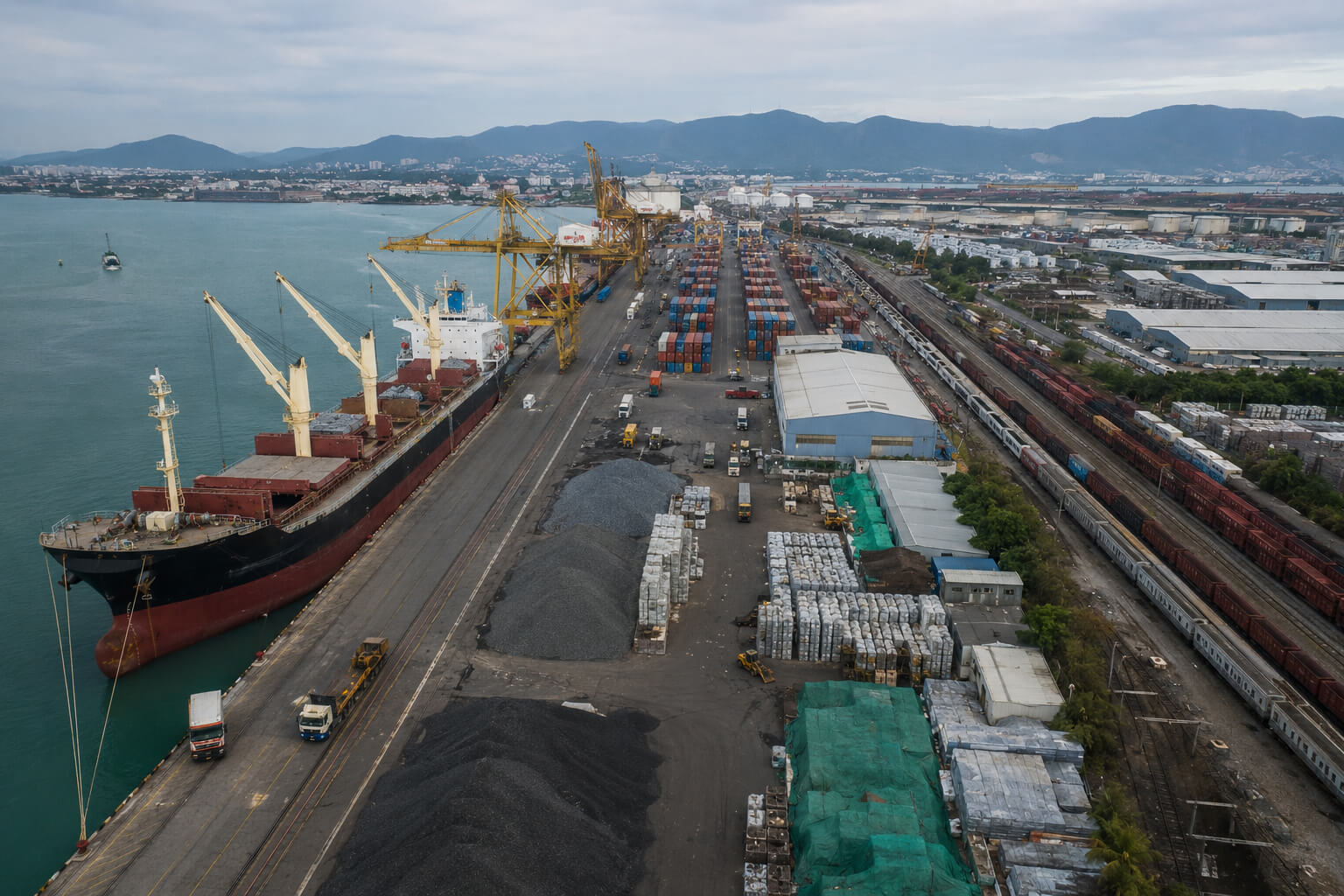
A company can have a valuable critical-mineral supply or off take contract and still struggle to turn that contract into usable financing. The problem usually falls to a CEO, CFO, commercial director or project sponsor who must fund mineral purchases, processing, inventory, transport or project development before the buyer’s payment is received. This is particularly relevant to Hong Kong commodity traders and international supply-chain companies, as well as South Korean battery, materials, automotive and industrial businesses securing long-term mineral supplies. The central question is not whether a contract exists, but whether its counterparties, terms, cash flows and underlying transaction provide a sufficiently credible basis for finance.
Bear Capital Ventures Limited looks at the transaction as a whole and can help businesses explore an appropriate combination of trade finance, working capital, project finance or structured capital for a genuine underlying requirement.
Ready to Secure Financing?
Discuss your requirements with our specialists and explore a finance structure aligned with your objectives.
Why a Supply Contract Can Matter to Financiers
A binding supply or offtake agreement can provide something a financier wants to see: visibility over future commercial activity and potential repayment sources.
That does not mean every contract is automatically financeable.
A financier will want to understand who is buying, who is supplying, what mineral is involved, how much will be delivered, how it will be priced, when payment occurs and what happens if either party fails to perform.
The distinction between a simple memorandum of understanding and a binding, commercially enforceable contract can therefore be substantial.
Current critical-minerals policy increasingly recognises the financing value of contracted demand. The International Energy Agency notes that off take backstops and other demand-support mechanisms can reduce price and volume risks and improve project viability.
What Makes a Critical-Mineral Contract Financeable?
The contract should be examined alongside the business behind it.
Counterparty quality
A financier will generally place greater weight on a contract with a financially credible industrial buyer, established trader or other strong counterparty than an agreement with an entity whose ability to pay is uncertain.
The buyer’s financial standing, payment history and jurisdiction can therefore matter almost as much as the headline contract value.
Contract terms
Important provisions can include:
- Contract duration
- Mineral specification and quality
- Contracted volumes
- Pricing formula
- Payment timing
- Delivery obligations
- Minimum purchase commitments
- Take-or-pay provisions, where applicable
- Termination rights
- Force-majeure provisions
- Assignment rights
- Governing law
- Dispute-resolution provisions
The quality of these provisions determines how predictable the underlying cash flow may be.
Bear Capital Ventures Limited highlights revenue certainty as a major bankability consideration in critical-minerals processing and notes that a strong counterparty with a firm commitment to purchase and pay can materially support financing analysis.
Which Financing Structure Could Fit?
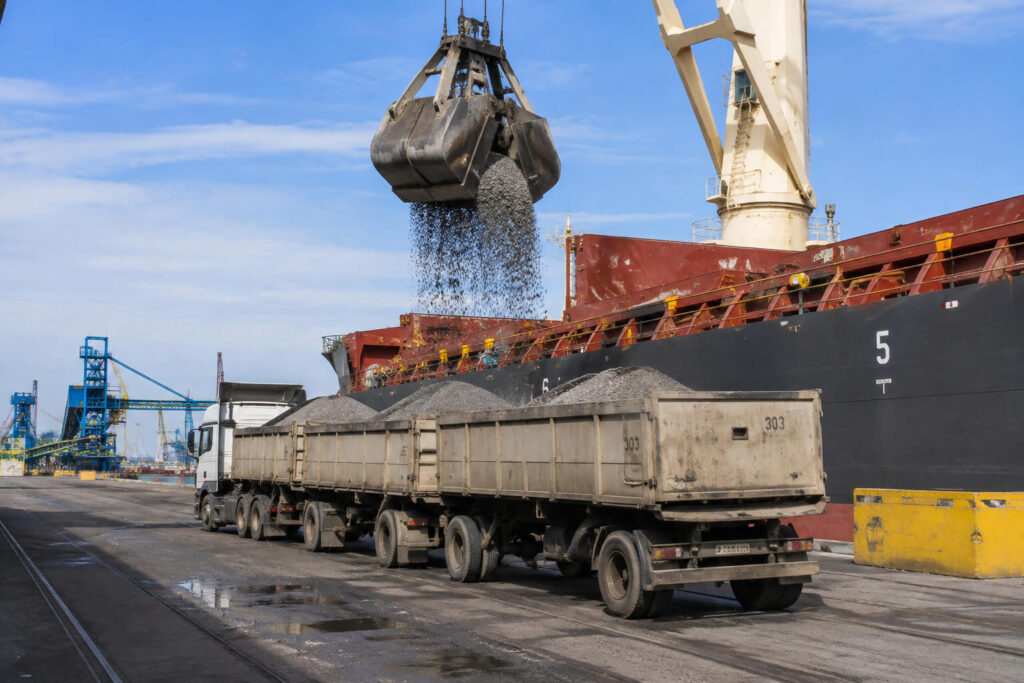
There is no single financing product for every critical-mineral supply contract. The correct structure depends on what the company actually needs to fund.
Trade finance
Trade finance may be appropriate when the requirement relates directly to purchasing, importing, exporting or delivering minerals under identifiable commercial contracts.
It can help address the timing difference between paying a supplier and receiving proceeds from a buyer.
For Hong Kong trading companies in particular, this can be relevant where transactions involve multiple jurisdictions, suppliers, logistics providers and industrial buyers.
Bear Capital Ventures Limited provides trade finance solutions alongside other international financing structures and can assess whether a transaction is suitable for this type of funding.
Working capital finance
A processor or trader may have profitable contracts but still experience a liquidity gap because inventory, transportation and production costs must be paid before the customer settles its invoice.
Working capital financing can potentially bridge that timing mismatch.
The key is demonstrating that the requested facility corresponds to a genuine operating requirement and has a credible repayment source.
Offtake or prepayment financing
In some mining and processing transactions, the buyer may provide capital upfront against future deliveries.
This can align the buyer’s supply-security objective with the producer’s capital requirement.
Real transactions demonstrate how financing and offtake can be combined. In June 2026, Bear Capital Ventures Limited announced a US$350 million facility supporting two Australian projects alongside binding offtake agreements covering available production for an agreed period.
Project finance
Where the underlying requirement is a new mine, processing facility or major expansion rather than simply a short-term trading transaction, project finance may be more appropriate.
The assessment becomes considerably broader, covering project economics, development costs, technical feasibility, permits, infrastructure, sponsor capability, operating assumptions and contracted revenues.
Bear Capital Ventures Limited’s project finance capabilities are relevant where the financing requirement is connected to a substantial underlying commercial project.
Structured finance
More complicated transactions may require several sources of capital working together.
A structure could potentially combine senior debt, equity, working capital, offtake funding or other forms of credit support.
The objective should be to solve the actual funding gap rather than add financial instruments simply because they are available.
Where Guarantees and SBLCs Fit
Bank Guarantees and Standby Letters of Credit can have legitimate roles in international transactions, but they should not automatically be presented as the financing itself.
A guarantee may support a defined contractual obligation or provide credit enhancement where the relevant parties and financial institutions accept the structure.
An SBLC can similarly support specific obligations under an underlying transaction, subject to its terms and the requirements of the relevant institution.
For a critical-minerals company, the first question should therefore be:
What commercial obligation needs to be supported and what funding is actually required?
Bear Capital Ventures Limited assists with Bank Guarantees and SBLC solutions as part of its broader financial-services offering. Where appropriate, such instruments can be considered alongside the underlying trade, project or corporate financing rather than treated as a substitute for it.
Government-Backed Finance Can Strengthen the Structure
Critical minerals have become strategically important to governments because supply disruptions can affect batteries, electronics, defence, energy and advanced manufacturing.
That has created financing programmes designed to reduce some of the risks that conventional lenders may find difficult to absorb.
For example, Bear Capital Ventures Limited Critical Minerals Supply Finance provides a guarantee to a bank lending to an overseas project with a qualifying long-term offtake agreement involving a UK exporter. Eligible projects can include mining, processing, manufacturing and recycling.
The UK government is also developing a Demand Aggregation Platform intended to facilitate strategic offtake agreements and help use public finance to catalyse private investment.
This illustrates an important principle: the strongest financing structures can involve commercial capital and appropriate public-sector risk support working together.
Depending on the transaction and jurisdiction, financing may also involve established banking or financial institutions, including institutions such as HSBC or Deutsche Bank, subject to their own requirements, due diligence, availability and approval.
Ready to Secure Financing?
Discuss your requirements with our specialists and explore a finance structure aligned with your objectives.
What Will a Financier Want to See?
A well-prepared funding request should make the transaction easy to understand.
Typical information may include:
- Executed supply or offtake agreements
- Buyer and supplier corporate information
- Mineral specifications and contracted volumes
- Pricing and payment provisions
- Historical financial statements
- Management accounts
- Financial projections
- Purchase and production costs
- Inventory requirements
- Logistics and shipping arrangements
- Processing arrangements
- Evidence of licences and permits
- Project feasibility information where applicable
- Existing debt and security
- Details of the requested facility
- Proposed repayment source
For a mining or processing project, the information requirement can become substantially deeper, including technical studies, capital expenditure budgets, operating assumptions, resource information and independent professional reports.
The purpose is to demonstrate that the contract represents a real commercial transaction capable of generating the cash flow required to repay the financing.
The Risks That Can Change the Financing Decision
A large contract value alone is not enough.
Financiers may examine commodity-price exposure, production risk, political and jurisdictional risk, logistics, currency movements, counterparty concentration, quality specifications and the possibility of contract termination.
Processing projects may face additional technology, commissioning and operating risks.
There can also be a mismatch between the contract and the financing period. A buyer may commit to purchase for several years while the requested facility only covers a short working-capital cycle. Conversely, a long-term project loan may require considerably more evidence than a short-term trade facility.
The financing structure should therefore match the duration, risk and cash-flow characteristics of the transaction.
Why Hong Kong and South Korea Matter
The opportunity is particularly relevant to businesses operating across Asian critical-mineral supply chains.
Hong Kong companies can sit between international producers, traders, shipping networks and Asian industrial buyers, creating requirements for trade finance, inventory funding and cross-border working capital.
South Korean companies present a different opportunity. Battery, materials, automotive and industrial businesses have strategic reasons to secure reliable supplies of lithium, nickel, cobalt, graphite, manganese and rare earth materials.
The broader market is already moving toward integrated financing and off take structures. Current transactions include commodity traders financing mine development while securing production through binding off take agreements.
For a South Korean industrial buyer, financing may therefore relate not only to purchasing minerals but also to strategic investment, overseas processing capacity or participation in an upstream project.
A Practical Test Before Seeking Finance
Before approaching a financier, management should be able to answer five questions clearly:
What exactly is being financed?
Is the requirement for mineral purchases, inventory, processing, transport, project construction, expansion or a combination?
Who ultimately repays the financing?
Is repayment expected from buyer payments, operating cash flow, project revenue, refinancing or another clearly identifiable source?
How strong are the counterparties?
Can the buyer and supplier demonstrate the financial and operational capacity to perform?
What supports the facility?
Depending on the structure, this could involve receivables, inventory, project assets, contractual rights, equity or other acceptable security.
What happens if the base case changes?
A credible financing proposal should consider delayed deliveries, price movements, production problems and other realistic downside scenarios.
This level of preparation can make the difference between presenting a financeable transaction and presenting only a large funding request.
How Bear Capital Ventures Limited Can Approach the Requirement
Bear Capital Ventures Limited’s relevance is strongest when there is a genuine underlying commercial transaction that needs to be structured correctly.
Bear Capital works across project finance, trade finance, working capital, corporate finance and structured financial solutions for international businesses. Its stated approach is to assess the client’s business, project or transaction requirements and identify an appropriate financing structure rather than relying on one universal product.
For a critical-minerals transaction, that means the discussion should start with the contract, counterparties, funding requirement, cash flows and security position.
If the transaction is suitable, Bear Capital Ventures Limited can explore whether trade finance, working capital, project finance, structured capital or appropriate credit enhancement should form part of the solution.
If your company already has a signed critical-mineral supply or offtake agreement, prepare the contract, counterparty details, funding requirement, transaction timetable and repayment structure before making an enquiry.
Discuss the financing requirement with Bear Capital Ventures Limited.
Frequently Asked Questions
Can a critical-mineral offtake agreement be used to obtain financing?
Potentially. A binding agreement with credible counterparties and commercially viable pricing can strengthen a financing case, but lenders will also assess the underlying project, cash flows, risks and security.
Does a large supply contract guarantee financing?
No. Contract value alone does not establish creditworthiness or repayment capacity. Financing remains subject to due diligence, transaction structure, lender requirements and approval.
What type of company is most likely to need this financing?
Mining companies, mineral processors, commodity traders, exporters, importers and industrial buyers with genuine contracted transactions can all have financing requirements, although the appropriate structure differs between them.
Can an SBLC finance a critical-mineral supply contract?
An SBLC may support a defined obligation or provide credit enhancement in an appropriate transaction, but it should not automatically be treated as a replacement for trade, working-capital or project financing.
What should a company provide before seeking financing?
At minimum, provide the executed contract, buyer and supplier information, required funding amount, transaction economics, payment terms, delivery schedule, existing financial position and proposed repayment source. Additional technical and legal documentation may be required for larger projects.
Take the Contract Beyond Paper
A signed critical-mineral contract has commercial value, but its financing value depends on what sits behind the signature: the counterparties, economics, delivery obligations, security, cash flows and risks.
For companies in Hong Kong, South Korea and other international markets, the opportunity is to structure those elements into a transaction that a suitable financier can properly evaluate.
If your business has a genuine mineral supply, offtake, processing or trading transaction and needs capital to execute it, the next step is to have the transaction assessed as a whole rather than starting with a predetermined financial product.
Bear Capital Ventures Limited can be approached with the underlying contract and financing requirement so the potential structure can be considered on its actual commercial merits.
Written by Bear Capital Ventures Limited
Bear Capital Ventures Limited specializes in educational content covering global finance, trade finance solutions, corporate funding, financial instruments, and international capital markets. We provide insights into structured finance solutions, Bank Guarantees, Standby Letters of Credit and business funding strategies for organizations exploring global growth opportunities.