
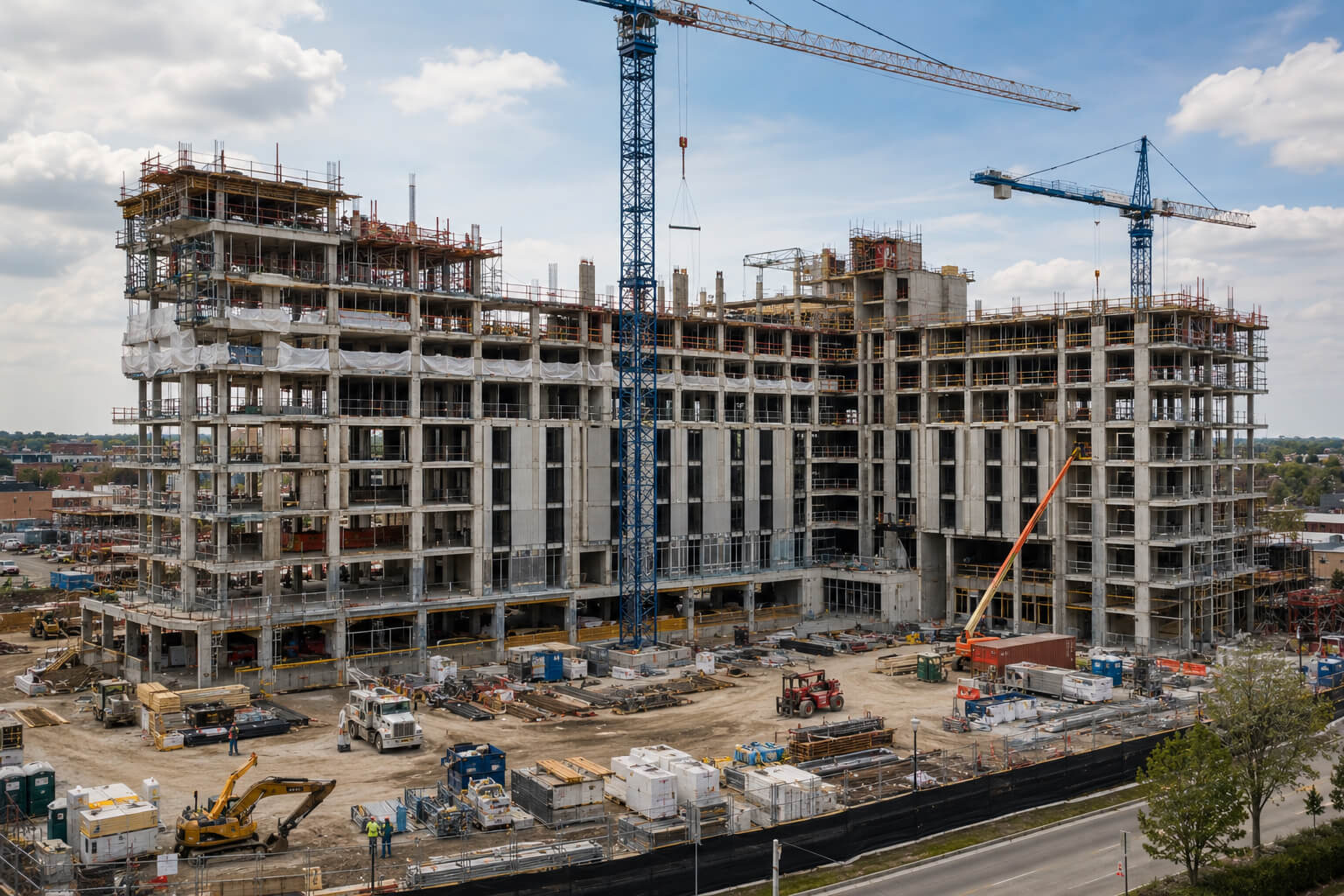
A hotel developer can secure a site, appoint a contractor and have a strong business plan yet still face a serious capital problem: construction funding may run out before the property produces enough income to support permanent debt. For a developer, property company owner or hospitality investment director, the challenge is therefore not simply finding money to build. It is structuring capital so the project can absorb construction costs, fit-out, opening expenses and the early trading period without creating a refinancing crisis.
Hotel development financing needs to account for the entire capital cycle, from development expenditure through opening and stabilization to the eventual refinance or sale. Bear Capital Ventures Limited can assess the funding requirement and explore potential structures suited to the project’s stage, capital needs and intended exit.
Ready to Secure Financing?
Discuss your requirements with our specialists and explore a finance structure aligned with your objectives.
The funding challenge changes as the hotel develops
A hotel has a very different financial profile before and after opening.
During construction, significant capital is being spent while the property generates little or no operating income. Once it opens, revenue starts flowing, but occupancy, room rates and profitability may take time to reach the levels used in the original financial model.
This creates a potentially difficult period between physical completion and financial stabilization.
A development facility may have a fixed maturity date. If construction takes longer than expected or the hotel needs more time to build its trading performance, the original repayment strategy can come under pressure.
Specialist hotel lenders describe development finance as short-term funding drawn progressively through construction and generally repaid through refinancing or sale once the completed property is trading.
The important lesson for a developer is straightforward: the exit should be considered when the construction financing is structured, not when the loan is approaching maturity.
What actually needs to be financed?
Before choosing a funding structure, establish the complete capital requirement.
For a new-build hotel, major conversion or substantial extension, this can include:
- Site acquisition or existing land value.
- Construction and contractor costs.
- Planning and professional fees.
- Furniture, fixtures and equipment.
- Hotel technology and specialist systems.
- Financing and interest costs.
- Development contingency.
- Pre-opening expenditure.
- Initial working capital.
- Cash reserves for the early trading period.
This distinction is important.
A £20 million development does not necessarily require a £20 million external loan. The developer may already own the site, have contributed equity or have committed other capital. The external requirement might be the remaining eligible development cost plus financing costs and sufficient reserves.
The financing question is therefore not simply, “How much can we borrow?”
It is, “What capital structure gives the project enough liquidity to reach its intended exit?”
Development Finance usually forms the base
Hotel development finance is designed for projects that are being constructed or converted before they become established trading businesses.
Funds are normally released through staged drawdowns rather than advanced entirely at the beginning. Construction progress, expenditure and remaining works can be monitored before further capital is released.
Current UK specialist-market guidance indicates that hotel development facilities can commonly run for around 18 to 36 months, with leverage assessed against both development cost and completed value. Indicative terms vary materially according to the project, sponsor, operator, security and lender.
Two measurements are particularly important.
Loan-to-cost (LTC) measures the facility against eligible project costs.
Loan-to-gross-development-value (LTGDV) measures the financing against the projected value of the completed development.
A lender may impose limits on both, meaning the available facility can be constrained by whichever calculation produces the lower amount.
That is why an attractive projected hotel value does not automatically mean the developer can borrow enough to cover the entire development budget.
Equity is more than a funding gap
Sponsor equity is an important part of the capital structure because it demonstrates financial commitment and provides protection against unforeseen events.
Equity can potentially comprise cash already invested, land value, additional sponsor capital or other acceptable contributions, depending on the financing arrangement.
Where senior debt does not cover the required amount, mezzanine or other subordinated capital may potentially fill part of the gap.
That can reduce the immediate equity requirement, but it normally increases the overall cost and repayment burden.
For that reason, the strongest structure is not necessarily the one with the highest leverage. It is the one that leaves enough liquidity for the project to reach completion and then survive the transition into stable trading.
The operator matters almost as much as the building
Hotel finance provider cannot be assessed solely as property finance.
The completed asset must generate sustainable operating income, so lenders can examine the proposed brand, franchise, operator, management agreement and the assumptions behind the trading forecast.
A recognised brand or experienced operator can provide additional evidence around positioning, distribution and expected operating performance. Current specialist hotel-finance guidance specifically highlights operator and franchise arrangements as important considerations when underwriting development schemes.
For an independent hotel, the developer may need stronger evidence supporting projected occupancy, average daily rate, RevPAR and operating margins.
The business plan therefore needs to explain not only how the hotel will be built, but how it will perform once built.

Do not finance construction and forget the opening
One of the most common structural mistakes is treating practical completion as the end of the financing requirement.
A new hotel can require significant expenditure immediately before and after opening. Recruitment, training, marketing, inventory, utilities, technology, insurance and other operating costs all need to be funded.
At the same time, revenue may initially be below the level assumed in the stabilized model.
A development facility that funds the building but leaves the owner without sufficient opening liquidity can therefore create a problem at the worst possible time.
The capital plan should identify how pre-opening expenditure and early working capital will be funded, and whether sufficient reserves exist to absorb a slower-than-expected ramp-up.
Bear Capital Ventures Limited now distinguish stabilization finance from development finance, with stabilization facilities intended to support hotels during the period between opening or reopening and established trading performance.
What if the hotel opens but does not stabilize on schedule?
This is one of the most important questions a developer should answer before committing to a construction facility.
Imagine a hotel scheduled to open in month 24, with the financial model assuming that it will reach the required trading performance within six months.
Construction is delayed by four months. The opening moves back. Then occupancy builds more slowly than forecast.
The original loan maturity may now arrive before the property qualifies for the permanent debt originally anticipated.
The developer could potentially face:
- A request for additional equity.
- An extension of the development facility.
- Additional interest and fees.
- Stabilization financing.
- A revised refinancing strategy.
- A sale of the completed property.
The precise solution depends on the facility terms, trading performance, valuation and circumstances.
The important point is that stabilization risk should be modelled before the development loan is drawn, rather than discovered when the exit deadline is approaching.
Ready to Secure Financing?
Discuss your requirements with our specialists and explore a finance structure aligned with your objectives.
What will a lender want to see?
A serious hotel financing proposal normally requires considerably more than a construction estimate.
Depending on the transaction, the financing assessment may include:
- Planning status and relevant permissions.
- Property ownership and title.
- Independent valuation.
- Detailed development budget.
- Construction programme.
- Contractor and professional-team credentials.
- Building contract and cost controls.
- Monitoring arrangements.
- Brand or franchise documentation.
- Operator or management agreement.
- Market and feasibility information.
- Occupancy and room-rate assumptions.
- Projected hotel operating performance.
- Sponsor experience.
- Evidence of equity.
- Existing borrowing and security.
- Proposed refinancing, sale or other exit.
For a conversion, technical and planning issues can become particularly important. Changing an existing building into hotel use can introduce additional construction, regulatory, layout and cost risks.
The financing case should therefore identify these issues early instead of assuming that an existing building automatically makes development simpler.

Costs need to be modelled alongside the construction budget
Hotel development finance generally costs more than long-term debt secured against an established trading hotel because the lender is exposed to development and execution risk.
Potential costs can include:
- Interest.
- Arrangement fees.
- Valuation costs.
- Monitoring-surveyor fees.
- Legal expenses.
- Other lender and transaction costs.
Current specialist UK market sources publish indicative development rates in the region of roughly 9% to 12% per annum, with some structures quoted monthly, but these figures are not universal lending terms and vary according to the project and lender.
Interest may also be rolled up during construction, depending on the agreed facility.
The developer should model the total financing cost rather than comparing headline rates alone.
A cheaper facility that lacks sufficient term, flexibility or an appropriate exit can ultimately be more expensive if refinancing becomes necessary.
Build the exit into the original capital plan
There are three common directions for the completed project.
Refinance onto permanent hotel debt
Once the property has established sufficient trading performance, the development facility may be refinanced into longer-term debt.
Permanent hotel lenders generally assess the operating business as well as the property, with established occupancy, ADR, RevPAR and cash flow becoming important to debt sizing.
Use stabilization finance first
If the hotel is open but still building its operating track record, stabilization funding may provide additional time for the business to reach the performance needed for longer-term financing.
Sell the completed asset
A developer intending to sell may repay the construction facility from the disposal proceeds rather than retaining the hotel.
The preferred exit should be supported by realistic assumptions around value, timing and operating performance.
Where Bear Capital Ventures Limited can fit
Bear Capital Ventures Limited provides project financing, development finance, working capital and other financial solutions for businesses and commercial projects. Its stated approach is to assess individual requirements and explore appropriate capital structures with relevant financing parties.
For a hotel developer, that can be useful where the requirement extends beyond a straightforward construction loan.
A project may need development capital alongside working capital, equipment expenditure or a structured approach to the eventual refinance. The appropriate combination depends on the project’s financial model, security, development stage and intended exit.
Explore Bear Capital Ventures Limited’s financing solutions
Where appropriate, financing may be arranged through established banking and financial institutions, including institutions such as HSBC and Deutsche Bank, subject to the requirements, availability and approval of the relevant institution.
Make the financing request easy to assess
A developer approaching a financing partner should prepare a concise project brief covering six areas:
The development: location, room count, concept, brand and current stage.
The capital: total cost, equity invested, existing funding and additional amount required.
The construction: contractor, programme, remaining expenditure and contingency.
The operation: operator, franchise arrangements, opening date and projected trading performance.
The exit: permanent refinance, stabilization strategy or sale.
The security: property ownership, existing charges and other relevant security.
This transforms a general request for “hotel funding” into an assessable transaction.
Bear Capital Ventures Limited can review the requirement and explore potential financing structures based on the project’s circumstances and objectives.
Discuss your hotel financing requirement with Bear Capital Ventures Limited
Ready to Secure Financing?
Discuss your requirements with our specialists and explore a finance structure aligned with your objectives.
Frequently Asked Questions from Hotel Developers
Can a hotel be financed before it opens?
Potentially. Development finance is designed for qualifying construction and conversion projects that have not yet developed established trading income. The lender will assess the development, sponsor, construction arrangements, value, security and proposed exit.
How much equity does a hotel development require?
There is no universal percentage. The requirement depends on project cost, valuation, lender leverage limits, sponsor strength, security and overall risk. The capital plan should also allow for contingency and the opening period.
Can financing cover the period after construction?
Potentially. A project may transition from development finance to stabilization or longer-term hotel debt depending on its trading performance and the terms agreed with the financing provider.
What happens if stabilization takes longer than expected?
The developer may need an extension, additional equity, stabilization finance, refinancing or a sale. The appropriate option depends on the hotel’s trading results, valuation, existing facility and revised exit timetable.
What should I provide to Bear Capital Ventures Limited?
Provide the project location, development stage, total cost, amount required, equity position, planning status, construction programme, operator or brand information, projected trading figures and intended exit. This gives Bear Capital Ventures Limited the information needed to assess the requirement and explore potential financing structures.
Written by Bear Capital Ventures Limited
Bear Capital Ventures Limited specializes in educational content covering global finance, trade finance solutions, corporate funding, financial instruments, and international capital markets. We provide insights into structured finance solutions, Bank Guarantees, Standby Letters of Credit and business funding strategies for organizations exploring global growth opportunities.