
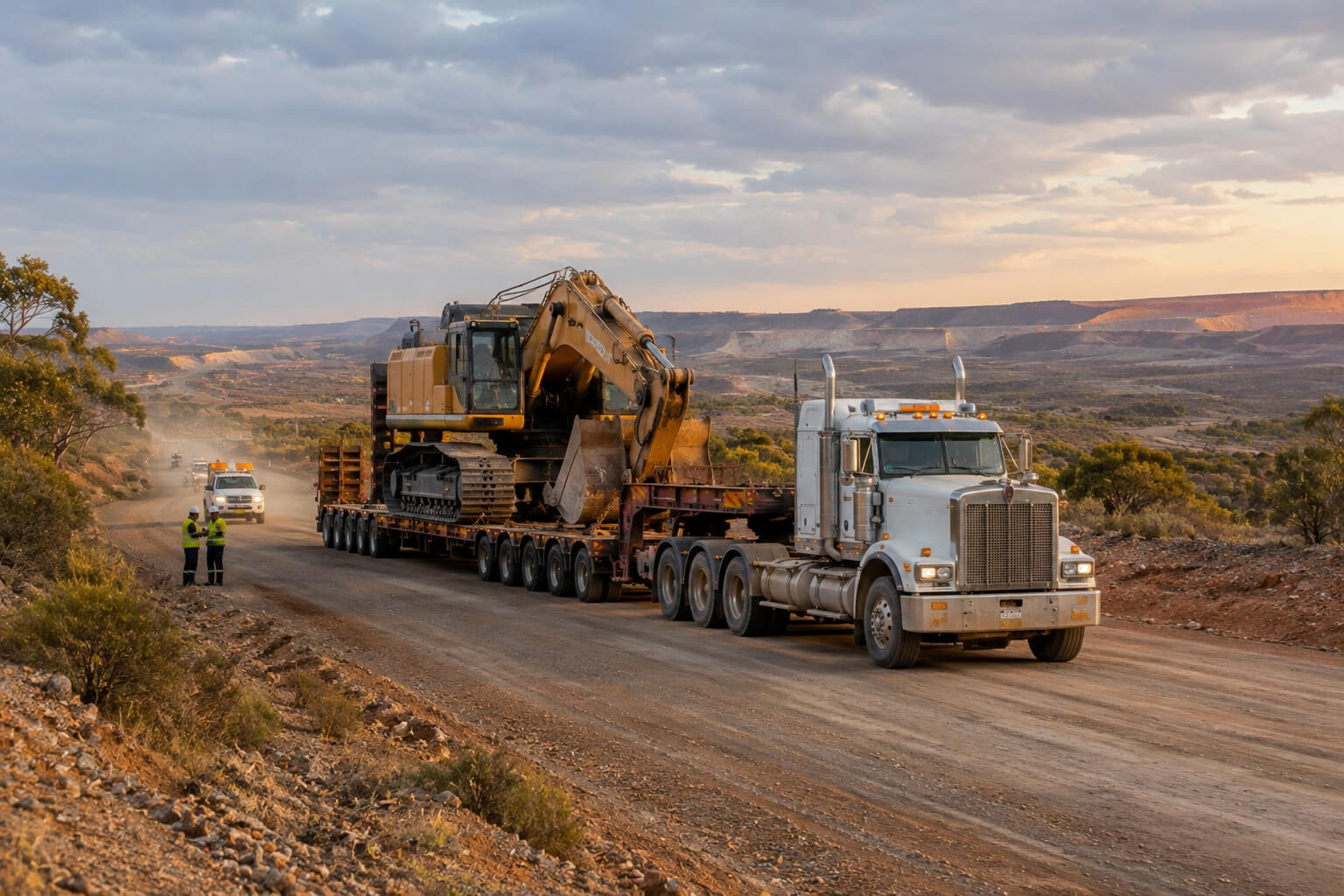
A mining contractor can secure a valuable contract and still face a serious financing challenge: acquiring the excavators, haul trucks and processing equipment needed to deliver the work without exhausting available cash. For Australian and international mining businesses, the funding requirement often extends beyond machinery to transportation, mobilisation, labour, maintenance and operating expenses before the first contract payment arrives. Mining equipment finance can help address the purchase cost, while a broader financing structure may be needed to cover the remaining shortfall.
Bear Capital Ventures Limited can assess the contract, equipment requirements and overall funding position to identify potential financing arrangements that support mobilisation, protect working capital and help the business prepare for its next commercial commitment.
If your company has secured a mining contract but cannot fund the entire equipment purchase from cash, contact Bear Capital Ventures Limited to discuss your funding requirements and the financing structures that may suit your transaction.
Ready to Secure Financing?
Submit your financing request and Bear Capital Ventures Limited will discuss potential financing options for your business.
Why a mining contract can create a funding gap
Winning a contract is a commercial achievement, but it can also place immediate pressure on a contractor’s balance sheet. The business may need to commit substantial capital before it begins receiving revenue from the work.
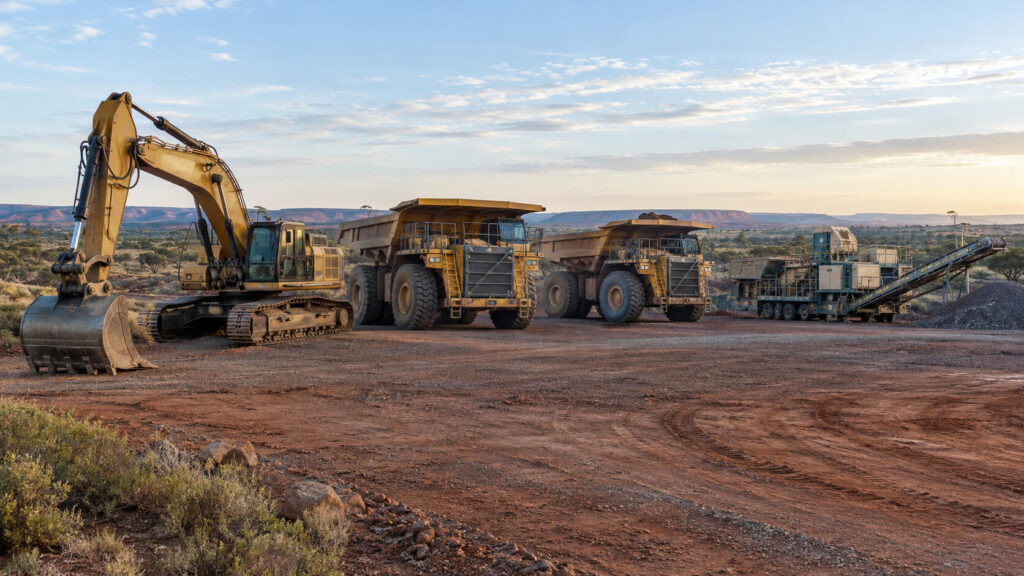
Consider a contractor awarded a 24-month earthmoving and materials-handling contract. The project requires an excavator, two haul trucks and a mobile processing unit. Although the projected contract revenue looks attractive, the contractor’s available cash must also cover wages, fuel, transport, insurance and maintenance.
Using all available cash to buy machinery could leave insufficient reserves to operate the fleet. Conversely, delaying equipment purchases could jeopardise the mobilisation schedule and the company’s ability to meet its contractual commitments.
This is why mining contractor equipment finance should be assessed in the context of the entire contract, not simply the price of each machine.
Three funding requirements commonly need attention:
- Equipment acquisition: The capital required to purchase new or used machinery, attachments and supporting equipment.
- Mobilisation: The initial cost of transporting equipment, preparing the site, deploying personnel and establishing operations.
- Working capital: The cash needed for fuel, wages, maintenance, subcontractors and other operating expenses until contract payments arrive.
These requirements are connected, but they are not interchangeable. Financing a machine does not automatically cover its transport to site or the wages of the crew operating it.
Bear Capital Ventures Limited can assess the combined funding requirement to help identify a financing structure that considers both the assets being acquired and the cash flow needed to put them to work.
Financing options for mining contractors
The right financing approach depends on the equipment, the contractor’s financial position, the contract terms and the amount of capital required. A single facility may be sufficient for a straightforward purchase, while a larger contract may require several complementary arrangements.
Equipment loans and asset-backed finance
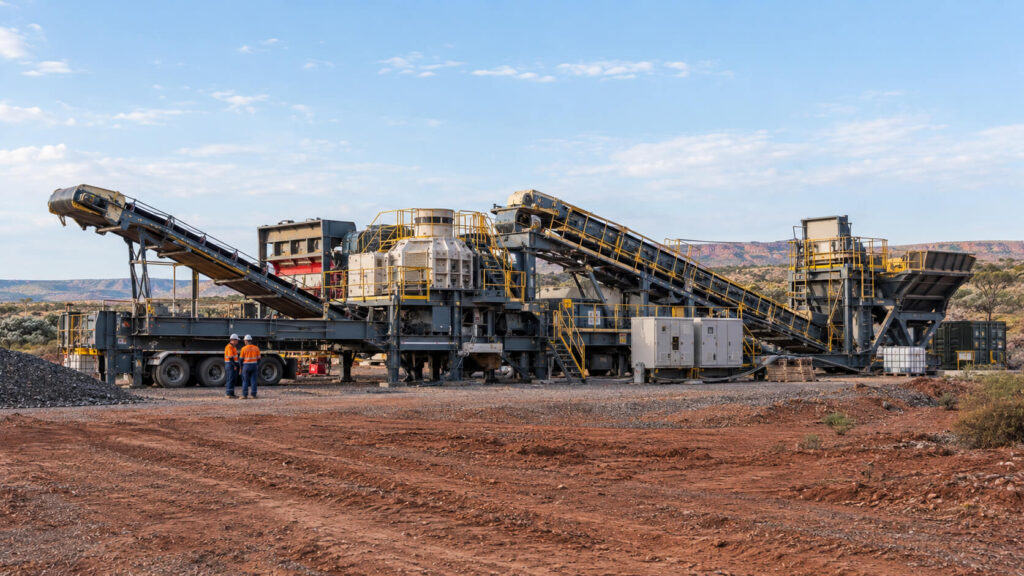
Equipment finance is a natural starting point when a contractor needs to acquire an excavator, haul truck, crusher, screening plant or other production machinery.
Depending on the arrangement, the equipment may serve as security for the financing. The asset’s age, condition, valuation, expected working life and resale prospects can influence the terms offered.
For Australian businesses, a chattel mortgage may be worth assessing when the intention is to acquire and own eligible business equipment. An equipment lease may suit a different ownership or cash-flow preference.
The decision should consider more than the deposit and monthly repayment. Contractors should compare the total financing cost, fees, repayment structure, residual or balloon payment, insurance obligations and consequences of early repayment.
For high-value mining machinery, the financing term should also be considered against the contract duration and the equipment’s productive life. A machine that remains useful after the current contract may offer greater flexibility than an asset with limited value beyond a single project.
Leasing and sale and leaseback
Leasing can help a contractor obtain the machinery required for a project without paying the full purchase price upfront. Ownership rights, maintenance responsibilities, end-of-term options and total costs depend on the agreement.
Sale and leaseback may be worth considering if a business already owns valuable equipment and needs to release some of the capital tied up in its fleet. Under this structure, eligible assets are sold to a financing provider and leased back to the business.
This may release cash for mobilisation or expansion, but it also introduces ongoing payments and potential restrictions. The business should assess the sale valuation, fees, lease obligations and effect on future borrowing capacity before proceeding.
Working capital and mining contract finance
A contractor may qualify for machinery funding but still face a cash shortfall between paying operating expenses and receiving payment for completed work.
Mining contract finance addresses this wider commercial challenge by considering the contract’s revenue schedule, operating costs and timing of cash receipts.
Depending on the transaction, potential options may include a working-capital facility, invoice or receivables finance against eligible claims, or a structured commercial facility combining equipment funding with operating capital.
The contract itself does not guarantee financing. A provider will generally need to understand the payment terms, the conditions for certifying claims, any retention amounts, and the risks of delayed or disputed payments.
For contractors undertaking substantial new work, mining working capital finance can be an important part of the funding assessment rather than an afterthought once the equipment has been purchased.
Structured financing for larger requirements
When several major assets must be acquired together, conventional single-asset finance may not address the full funding requirement.
A structured approach can assess the machinery purchases, existing debt, available security, mobilisation costs and forecast contract receipts together. The aim is to understand how the different obligations interact and whether the proposed repayment commitments are sustainable.
Bear Capital Ventures Limited can assess these requirements and facilitate access to potential financing structures for eligible commercial transactions. The appropriate approach will depend on the strength of the underlying business, the project economics, documentation and the financing terms that can be agreed.
Ready to Secure Financing?
Submit your financing request and Bear Capital Ventures Limited will discuss potential financing options for your business.
Funding the equipment is only part of the challenge
A mining contractor’s cash-flow forecast should show when expenses arise, when revenue becomes payable and how the business will meet its obligations if payments arrive later than expected.
Suppose a contractor must spend AUD 2.4 million on equipment and another AUD 350,000 on initial mobilisation and operating costs. The total requirement is AUD 2.75 million before allowing for any additional contingency.
If the company has AUD 700,000 available to contribute without undermining its operating reserves, the financing shortfall is not simply the machinery purchase price minus the cash contribution. The contractor must also consider transaction costs, existing debt commitments and the liquidity required to sustain operations.
These figures are illustrative, not a financing quotation or an indication of approval.
A detailed cash-flow forecast can reveal whether the business needs equipment finance alone or a broader arrangement. It can also identify the amount of funding required, the date it must be available and the repayment schedule the contract can realistically support.
Planning mining equipment mobilisation finance
Mining equipment mobilisation finance becomes particularly relevant when substantial expenses arise before the first progress payment.
For Australian contractors operating across remote regions, initial expenses can include:
- Transporting heavy machinery to the site.
- Preparing equipment and arranging inspections.
- Recruiting, transporting and accommodating personnel.
- Purchasing fuel, consumables and replacement parts.
- Covering wages and subcontractor invoices before payment is received.
International contractors may also face import duties, freight costs, currency fluctuations and cross-border documentation requirements.
The key is to prepare a funding schedule before committing to equipment purchases. Identify the contract commencement date, supplier settlement deadlines, expected mobilisation expenses and earliest realistic date for receiving revenue.
Bear Capital Ventures Limited can use this information to assess the timing and scale of the requirement and determine which financing structures merit consideration.
What determines whether a financing proposal is credible?
A strong application explains not only what the business wants to buy, but why the purchase is commercially viable and how the financing will be repaid.
1. The contract and expected revenue
Provide the signed contract or formal award documentation, including the scope of work, duration, commencement date, payment terms and any conditions that could affect revenue.
A tender or preliminary expression of interest is not equivalent to an executed contract. The status of the opportunity should be disclosed accurately.
2. Equipment specifications and valuation
Prepare supplier quotations identifying the make, model, condition, purchase price and delivery schedule for each asset.
For used machinery, maintenance records, operating hours, inspection reports and an independent valuation may strengthen the assessment. Imported equipment may require additional verification of ownership, condition and compliance with applicable requirements.
3. Business financial information
Financing providers may request recent financial statements, management accounts, business bank statements, tax information, existing debt schedules and cash-flow forecasts.
They may also assess the directors’ relevant experience, trading history, current fleet, existing security commitments and ability to manage the contract.
4. Repayment capacity and contingency planning
Projected revenue should be tested against fuel, wages, repairs, insurance, subcontractors, financing repayments and other overheads.
Consider what happens if equipment delivery is delayed, a machine breaks down, the contract is varied or a progress claim takes longer to be paid. A proposal that works only under perfect conditions may expose the business to unnecessary pressure.
5. Funding costs and timing
Ask for a clear breakdown of interest, fees, deposits, repayment frequency, security requirements, conditions precedent and expected settlement milestones.
There is no universal approval timeframe for mining equipment finance. The complexity of the transaction, the completeness of the documents, equipment valuations and any required approvals can all affect timing. Begin discussions well before the contract’s mobilisation deadline.
Ready to Secure Financing?
Submit your financing request and Bear Capital Ventures Limited will discuss potential financing options for your business.
When Bank Guarantees and Standby Letters of Credit are relevant
Mining contracts sometimes require a contractor to provide financial security, such as a performance guarantee or another instrument acceptable to the beneficiary.
A Bank Guarantee can support specified contractual obligations under its terms. A Standby Letter of Credit can provide a separate form of payment assurance, subject to its wording, conditions and the beneficiary’s acceptance.
Neither instrument automatically supplies the cash needed to purchase an excavator or haul truck. Issuance may also require collateral, credit support, fees and due diligence.
If the contractor needs both machinery funding and contractual security, the two requirements should be assessed separately and coordinated within the broader transaction.
Bear Capital Ventures Limited assists clients with international financing arrangements, including Bank Guarantees and Standby Letters of Credit, as well as trade finance and project funding. The first step is to establish what the contract actually requires, who the beneficiary is and whether the proposed instrument will be accepted.
When mining project finance may be suitable
Mining project finance may be relevant when the requirement extends beyond a small number of equipment purchases to a substantial fleet expansion, integrated processing operation or larger project with multiple funding needs.
The assessment may involve projected project cash flows, capital expenditure, operating costs, contractual revenue, existing obligations and the proposed allocation of risk.
Not every contractor needs project finance. For a business buying one excavator against a profitable contract, conventional equipment finance may be more straightforward. For a larger operation involving several assets, significant mobilisation costs and staged revenue, a coordinated financing structure may warrant closer consideration.
The priority is to match the funding arrangement to the actual transaction rather than introduce unnecessary complexity.
How Bear Capital Ventures Limited can support your financing requirement
For a contractor preparing to deliver a new mining contract, the challenge is finding a financing approach that accounts for the equipment, the mobilisation deadline and the cash needed to keep operations running.
Bear Capital Ventures Limited assesses the commercial purpose of a proposed transaction, the total funding requirement and the documentation supporting it. This helps establish whether the request is primarily for equipment acquisition, working capital, contractual security or a combination of financing needs.
For Australian and international clients, financing may be arranged through Bear Capital Ventures Limited, with potential structures considered in line with the transaction’s commercial requirements and the applicable financing criteria.
The assessment may cover:
- The equipment to be purchased, its cost and expected delivery date.
- The contract supporting the purchase and its projected revenue.
- The funding shortfall, available cash contribution and mobilisation expenses.
- Existing financial commitments, cash-flow forecasts and repayment capacity.
- Any contractual security requirements that must be addressed separately from direct funding.
For larger requirements, Bear Capital Ventures Limited can also assess broader commercial financing needs involving fleet expansion, trade finance, project funding and international financial arrangements.
The objective is to identify a realistic financing approach supported by the underlying transaction, rather than assume that one product will solve every funding challenge. Financing terms, security requirements, costs and approval remain subject to assessment.
Prepare your mining equipment financing request
If your company has secured a contract and needs machinery to begin work, preparation can make the initial financing discussion more productive.
Before contacting Bear Capital Ventures Limited, gather your contract or award documentation, equipment quotations, estimated funding amount, mobilisation schedule and latest business financial information. Explain how much cash your company can contribute without compromising day-to-day operations.
Be clear about the deadline for settling equipment purchases and the date the business expects to receive its first contract payment. If a Bank Guarantee or Standby Letter of Credit is also required, provide the relevant contractual wording and beneficiary requirements.
Ready to finance your next mining contract?
Bear Capital Ventures Limited can assess your equipment acquisition, mobilisation and working-capital requirements and help identify potential financing structures for your business.
Submit your proposed equipment list, estimated funding requirement, contract status and mobilisation deadline to begin a focused discussion about your financing needs.
FAQs About Mining Equipment Finance
1. Can I obtain mining equipment finance if I cannot pay the full purchase price in cash?
Potentially. Equipment finance may fund part or all of an eligible purchase, depending on the asset, business financial position, security and financing criteria. A deposit or additional contribution may be required. Bear Capital Ventures Limited can assess the transaction and identify potential financing structures.
2. Can a signed mining contract help me obtain equipment finance?
A signed contract can help demonstrate the commercial purpose of the equipment purchase and provide evidence of anticipated revenue. However, approval also depends on the contract terms, repayment capacity, asset valuation and the contractor’s financial position.
3. Can mining equipment finance cover mobilisation and working capital?
Equipment finance generally focuses on eligible machinery. Transport, wages, fuel and other mobilisation expenses may require separate working-capital funding or a broader commercial financing arrangement. The full cash-flow requirement should be assessed before the business commits to the purchase.
4. Can Bear Capital Ventures Limited arrange financing for excavators, haul trucks and processing equipment?
Bear Capital Ventures Limited can assess the proposed purchase, contract documentation, equipment costs and funding shortfall, then facilitate access to potential financing solutions. The structure, terms and outcome depend on the transaction and applicable approval requirements.
5. What documents are needed to apply for mining equipment finance?
Typical documents include the contract or letter of award, equipment quotations, business financial statements, bank statements, existing debt details and cash-flow forecasts. Used or imported machinery may require additional valuations, inspection records and ownership documentation.
Written by Bear Capital Ventures Limited
Bear Capital Ventures Limited provides practical insights into global finance, trade finance, corporate funding, structured financing, and international capital markets. Our content explores financing solutions including bank guarantees, standby letters of credit, letter of credit financing, working capital, trade finance and project finance, helping businesses and project sponsors better understand their financing options when pursuing international trade, expansion, and growth opportunities.